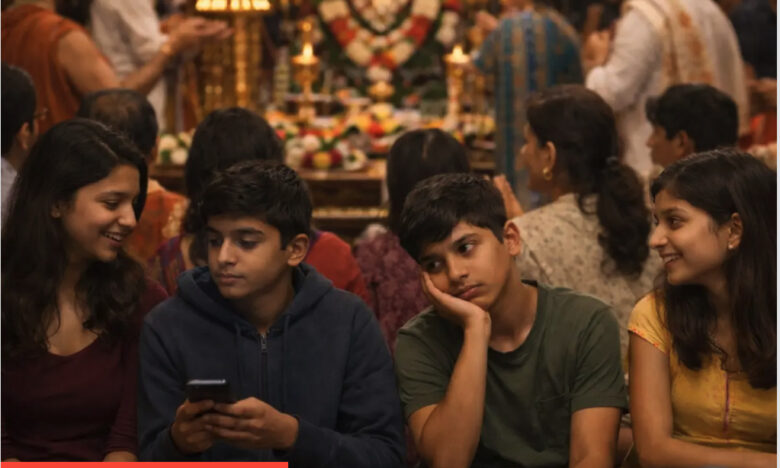
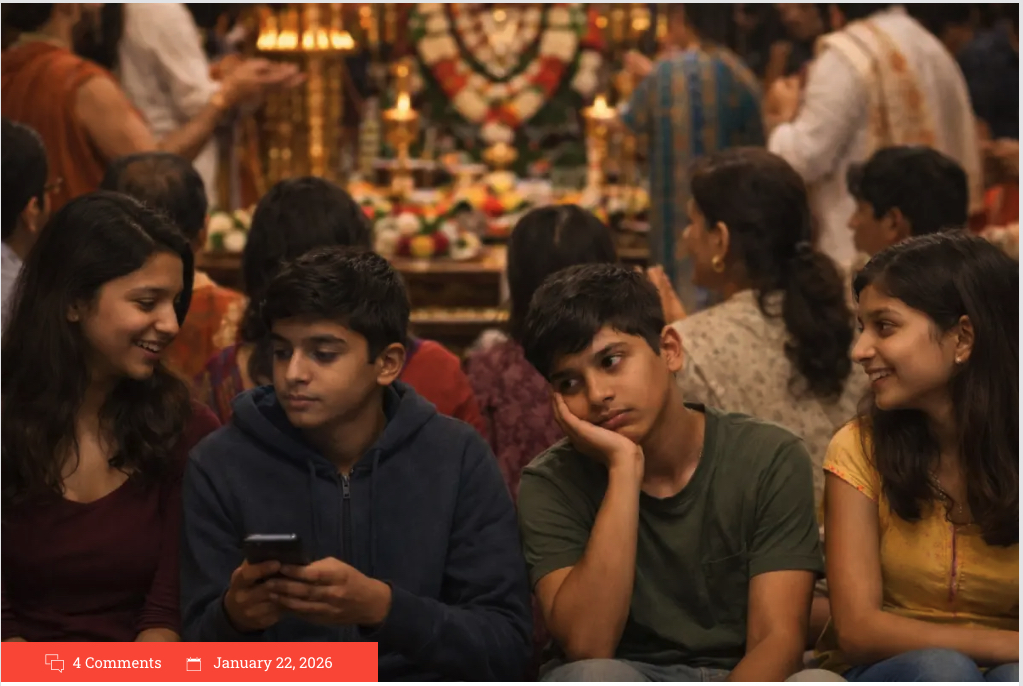
UNITED STATES, January 22, 2026 (India West by Dr. Jai G. Bansal): On a typical weekend in many American cities, the Hindu presence is easy to see. Newly built temples rise in suburban landscapes. Diwali celebrations fill convention centers and public squares. Yoga studios, Sanskrit terms and Hindu symbols circulate comfortably in mainstream culture. By outward measures, Hindu identity in the United States appears visible, confident and socially secure. Yet this visibility obscures a structural shift that should give us serious pause. Across many Hindu households, intergenerational transmission is thinning. Children often grow up knowing that they are Hindu, but with limited understanding of what that identity entails as a way of life. Temple attendance is common, but explanatory depth is not. Festivals are celebrated but rarely shape the rhythm of the year. Rituals are performed, yet their meanings remain opaque. Identity is present but lightly held.
This pattern does not arise from rejection or conflict. It emerges through absence. Research on immigrant religious retention consistently shows sharp weakening by the second and third generations where education and transmission are informal and optional. Hindu Americans are not an exception. As first-generation immigrants age, the informal modes of inheritance they relied on—habit, language, unspoken assumptions—lose their effectiveness. What once moved naturally within the household no longer finds a stable pathway. Many young adults continue to identify as Hindu in a cultural or ancestral sense, but struggle to articulate beliefs, practices, or ethical frameworks in their own terms. This is not always experienced as loss. Professional success, social integration, and public affirmation create little immediate pressure to notice what is thinning. Prosperity can obscure erosion, allowing continuity to appear intact long after its foundations have weakened.
Much more of this insightful essay at source.
https://indiawest.com/crisis-of-continuity-hindu-america-needs-institutions-of-learning-not-just-temples/

A daily summary of world news for Hindus and non-Hindus alike