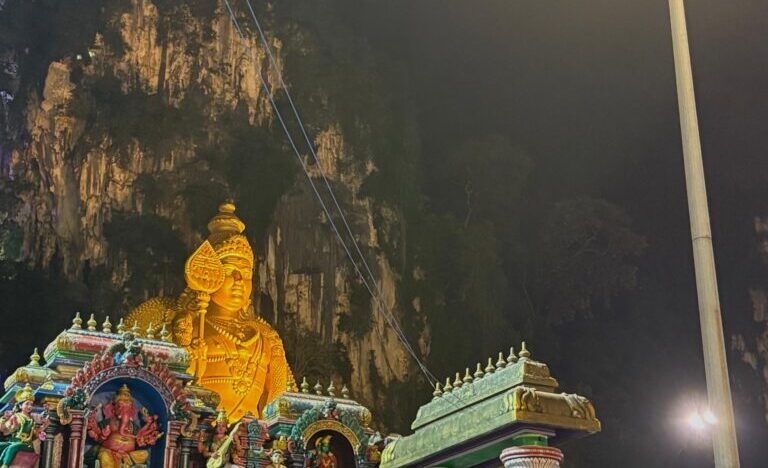
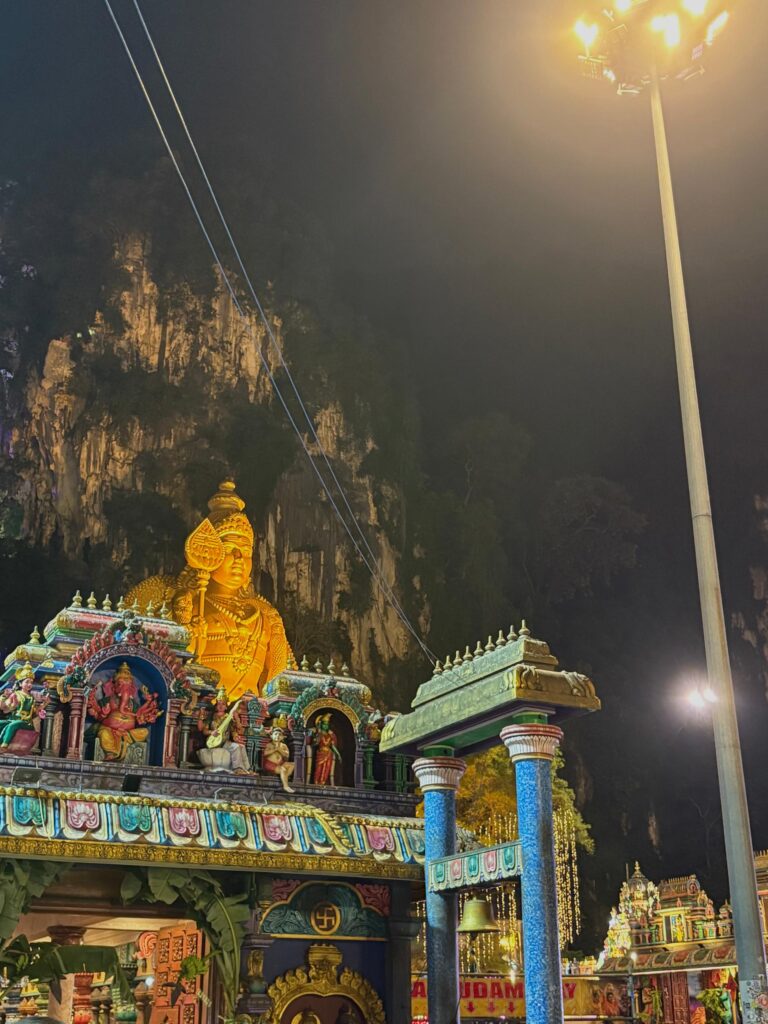
KUALA LUMPUR, MALAYSIA, February 11, 2016 (SAYS, by Sadho Ram): My family traces its roots to the Marwar region of Rajasthan, and my early understanding of Hinduism was shaped by that geography and by the eastern part of India in which I was raised. Ours was a faith practiced through Rajasthani customs and eastern Indian beliefs. We prayed to Surya, the Sun God, among a number of other Deities. At home, we spoke Marwari, one of the many Rajasthani languages, and outside, I switched easily between Maithili, Hindi, Bengali and Urdu, picking up languages as if they were hobbies; a common trait when you grow up in that part of the country. I’m very much Indian-from-India in the most literal sense. Tamil, however, was not a language I heard growing up. And Thaipusam was not a festival I knew existed. Before moving to Malaysia to continue my work with SAYS, it simply wasn’t part of my world. And until I met Navina, a Tamil Malaysian, this entire universe — Lord Murugan, the Vel, chariot walks, kavadi carriers, urumi melams — existed somewhere outside my lived experience.
Being part of my wife’s Tamil Malaysian family meant stepping into a culture that I had never encountered growing up in India. In her family, Thaipusam has been celebrated, year after year, from her late grandfather to her retired mother, across generations. Walking alongside the chariot with my wife, I was struck by how many people emerged for Thaipusam that night. On ordinary days, Indian Malaysians are dispersed, hidden even. At most, they are folded quietly into the city’s background, barely noticeable. That night, on 30 January, at the Pasar Seni LRT station, it was different. Coming from India, where devotion takes countless forms and overwhelms you by sheer variety, I was struck by how rooted this felt. This wasn’t a diluted version of something left behind. It was sustained and alive, carried carefully, year after year, by a community that clearly knew why it was still doing this. This wasn’t culture being preserved for display. It was culture being lived, in numbers large enough to fill streets and small enough to show up in selfless acts of care. It taught me what devotion looks like when a culture refuses to fade.
More of Sadho Ram’s personal testimony at source.
https://says.com/my/culture/walking-to-batu-caves-showed-me-what-devotion-looks-like-when-a-culture-refuses-to-fade

A daily summary of world news for Hindus and non-Hindus alike