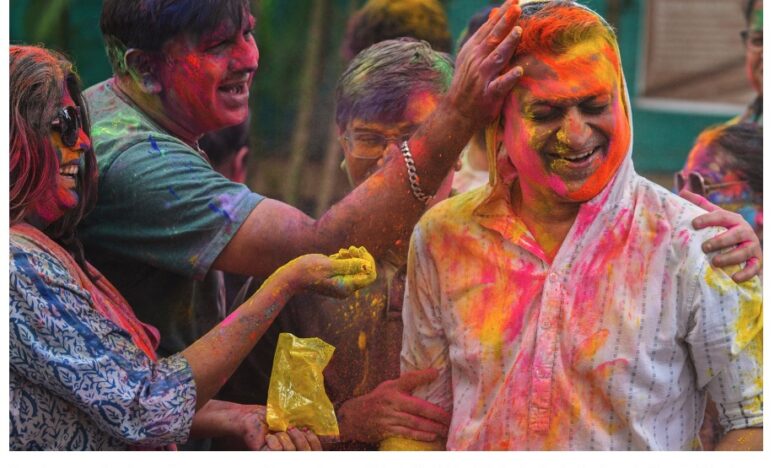
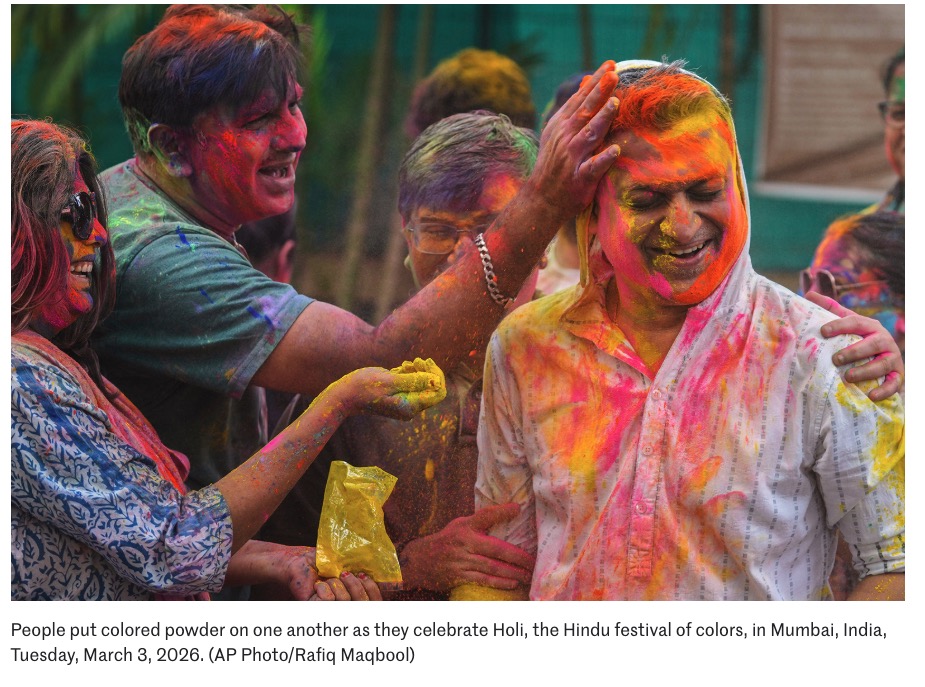
INDIA, March 4, 2026 (RNS): Today is Holi, the prominent Hindu holiday recognized for its colorful celebrations. Across South Asia and its diaspora, revelers gather in large groups to throw colored powder at one another, dance to Bollywood hits and wash the pigment away with water guns and balloons. For many, Holi simply marks a farewell of winter and the arrival of spring’s abundant blooms. The day falls on the last full moon, or purnima, in the Hindu lunar month of Phalguna. In modern times, public color runs, large music festivals with DJs and children’s Holi parties invite people of all backgrounds to join in on the fun.
In 17th-century India, Holi was a festival that celebrated agriculture, good spring harvests and fertile land. Some historians have suggested that music, rather than color, was central to the initial Holi celebrations. Yet colors play a significant role in Holi, representing various emotions and elements of nature. Red symbolizes love and fertility, yellow signifies prosperity and new beginnings, blue is associated with the divine Krishna, and green embodies the rejuvenation of life and the onset of spring. Many of the colored powders used to celebrate are made with natural ingredients, such as dried marigold, hibiscus flowers and henna leaves. In all interpretations, Holi is seen as a festive day to end conflicts, forgive the past and start a new season. Many Hindus see the day as an opportunity to connect with family and make new friends, often through smearing color and shouting the Hindi greeting “Holi Hai!” (“It’s Holi!”)
More on the legends surrounding Holi at source.
https://religionnews.com/2026/03/04/the-many-stories-of-holi-hinduisms-festival-of-colors/

A daily summary of world news for Hindus and non-Hindus alike