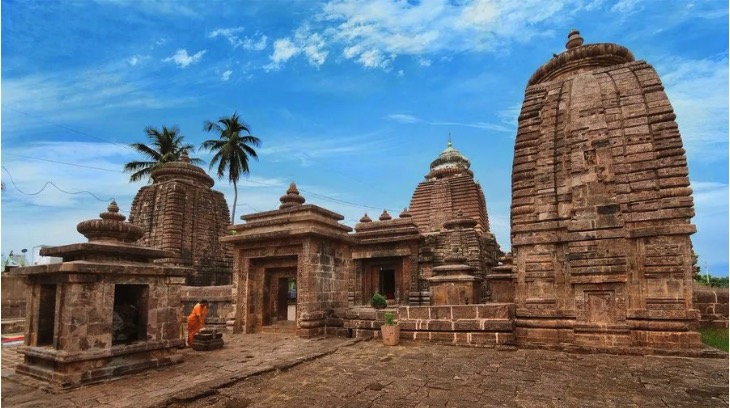
INDIA, June 24, 2026 (Sanathana Dharma by Ratnakar Sadasyula): Srimukhalingam isn’t just a temple, it’s a living manifestation of the Eastern Ganga dynasty’s spiritual and political identity. The architectural triad there of the Madhukeswara, Someswara, and Bhimeswara shrines, is like a cosmic axis that held the region’s Shaiva faith together for centuries. The presence of Lakulisa is especially profound. His iconograph, usually depicted with a yogic staff and surrounded by four disciples, anchors the temple in the Pashupata Shaiva tradition, which emphasized asceticism, yogic power, and inner realization. And how poetic is it that after Chodaganga Deva moved the capital to Cuttack to construct the great Jagannath temple at Puri, Srimukhalingam’s luminous past lingered in its stone mandapas, not forgotten but folded into sacred memory.
The Pashupata tradition, formalized by Lakulisa and his four disciples, held sway over temple-building communities, especially during the Maitraka and early Kalachuri periods. In Mukhalingam’s context, the Eastern Gangas likely absorbed these currents through cultural exchange from Odisha’s Ratnagiri and Udayagiri, where Shaiva-Tantric matrices were already thriving. Of the Shaiva temples in Mukhalingam, the three most famous ones are Srimukhalingam, Bhimeswara Swamy and Someswara Swamy. Built in typical Kalinga style, the temples are noted for their rich sculpture. The triangular spatial layout of the Madhukeswara, Bhimeswara, and Someswara temples is more than architectural, it mirrors the trikona, a potent yantric form in Tantric Shaivism. Madhukeswara anchoring the east, Bhimeswara to the south and Someswara aligned with lunar tranquility and rejuvenation, representing the triple aspects of Shiva: creator, destroyer, and protector.
More at source:
https://sanathanadharma.substack.com/p/sri-mukhalingam

A daily summary of world news for Hindus and non-Hindus alike