
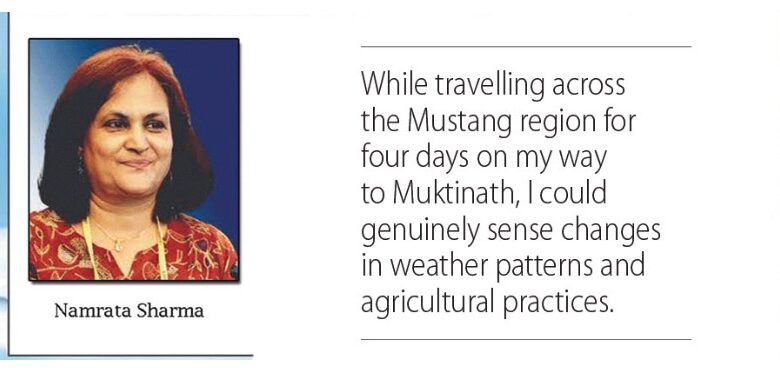

NEPAL, May 27, 2026 (The Rising Nepal, by Namrata Sharma): The writer reflects on completing a third pilgrimage to Muktinath Temple during the 2026 Everest climbing season, observing a growing number of pilgrims and trekkers that highlights the rise of religious tourism and trekking in Nepal. The journey coincided with the sacred Purushottam Month, a spiritually important period in Hinduism dedicated to Lord Vishnu and the pursuit of salvation. The essay emphasizes the deep cultural and spiritual connection Nepali people have with the Himalayas, which are considered sacred in Hindu tradition and continue to attract climbers and adventurers from around the world. However, alongside admiration for the mountains, the author notices alarming environmental changes, including warmer temperatures and reduced snow cover around the Mustang and Muktinath regions compared to previous visits.
The article raises serious concerns about climate change and the increasing commercialization of the Himalayas, particularly Mount Everest. Despite record-breaking Everest climbing permits and achievements by climbers like Kami Rita Sherpa and Kenton Cool, Sharma warns that overcrowding, unstable ice conditions, and glacier retreat are threatening the fragile Himalayan ecosystem. Scientific reports cited in the essay show glaciers melting at an accelerating rate, increasing risks such as glacial lake outburst floods, erratic rainfall, and disruptions to agriculture and water resources for millions of people. While tourism remains vital for Nepal’s economy, the government must prioritize environmental protection, sustainable tourism, and preservation of the Himalayas, which are portrayed not just as symbols of beauty and spirituality, but as natural treasures that demand urgent protection.
Read the full article at source.
https://risingnepaldaily.com/news/80937