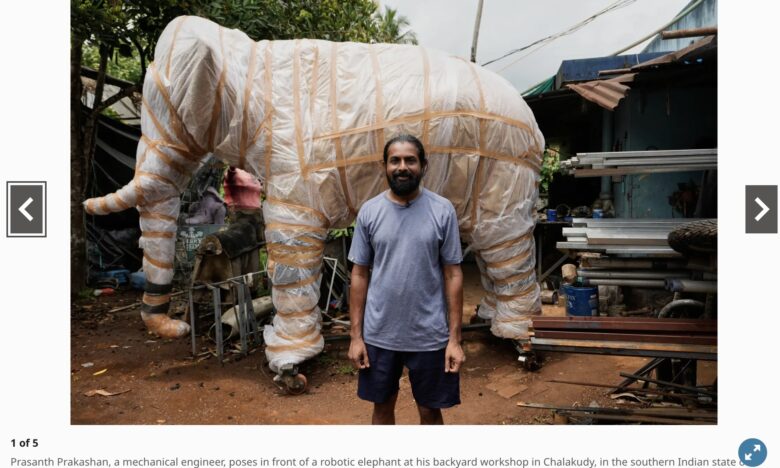
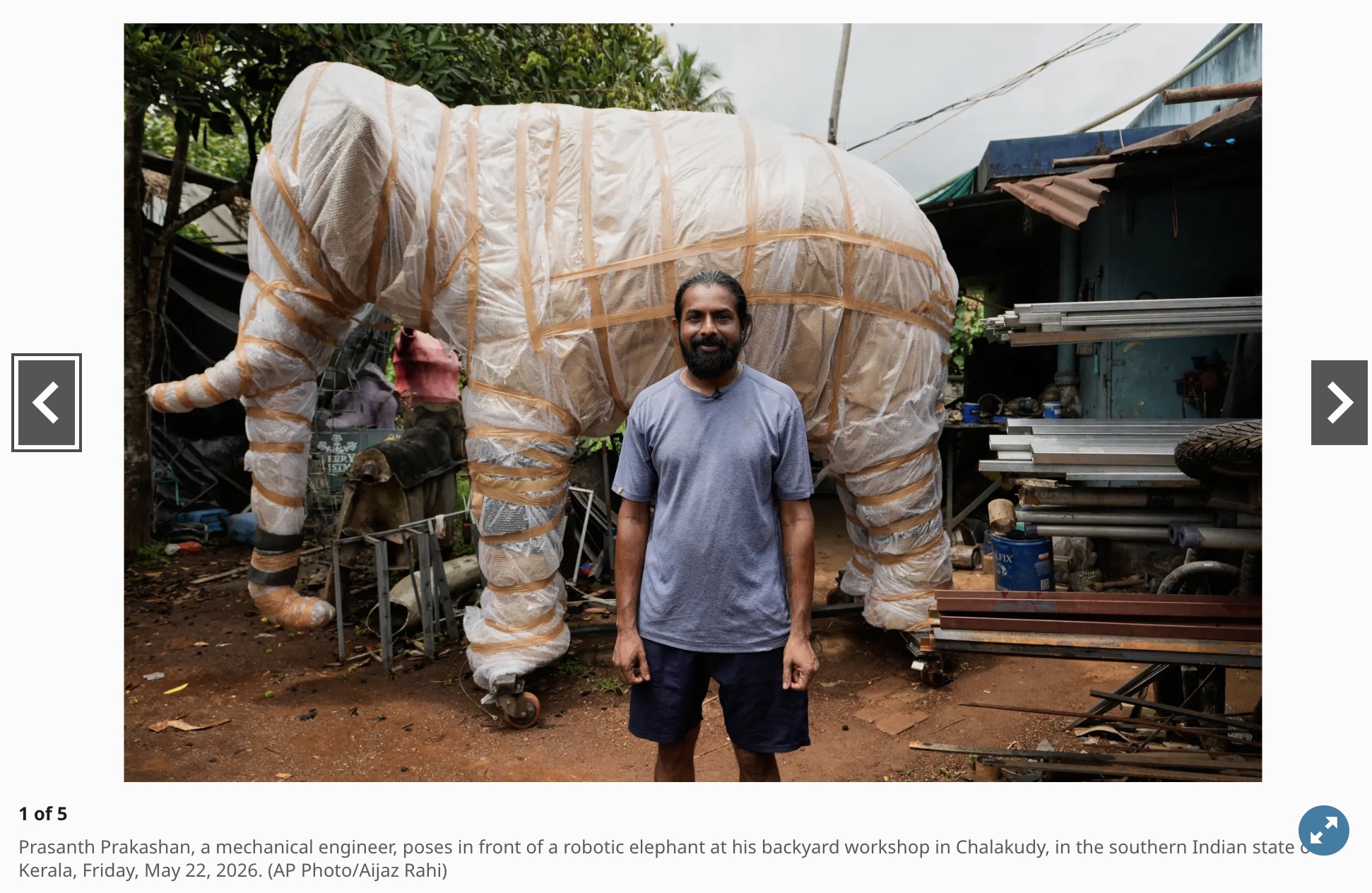
CHALAKUDY, INDIA, July 4, 2026 (Courant): The life-size robotic elephants in Prasanth Prakashan’s backyard workshop have ears that flap, tails that swish and trunks that squirt water. But that’s about all they have in common with their real-life counterparts revered across India as manifestations of the divine. The animatrons, crafted from fiberglass, iron and rubber, are intended to take the place of live elephants in Hindu temples. The change pleases animal welfare activists but upsets those who passionately believe real elephants are inextricable from the temple rituals and festivals where they are bestowed superstar status. The animal welfare group PETA and other nonprofits have donated about 40 robotic elephants, costing about $6,000 each, to Indian temples to replace live elephants.
Venerating elephants is not a concept unique to Kerala or Hinduism. Buddhists believe elephants are Buddha-like, symbolizing patience, wisdom and enlightenment. In Kandy, Sri Lanka, 100 decorated elephants parade the streets, the largest carrying the Buddha’s tooth relic in a golden casket. In Kerala, festivals with live elephants are crowd-pullers. The Thrissur Vadakkunnathan temple’s annual Pooram parade features about 100 elephants adorned in golden headgear and colorful silk caparisons. Many traditionalists don’t believe robotic elephants belong in temples. K. Mahesh rents out his real elephant for festivals about 45 days a year. He believes elephants are holy. “If you don’t believe elephants are sacred, what’s the point of a robotic elephant in a temple?” he asked. Mahesh has had his elephant for 25 years and says the animal “is like a family member or a pet” who brings joy to all, provided it is treated with care and caution. Several temple administrators have denounced robotic elephants for rituals and festivals.
Much more on the issue at source.
https://www.courant.com/2026/07/04/robotic-elephants-draw-crowds-and-controversy-in-some-of-indias-hindu-temples/

A daily summary of world news for Hindus and non-Hindus alike