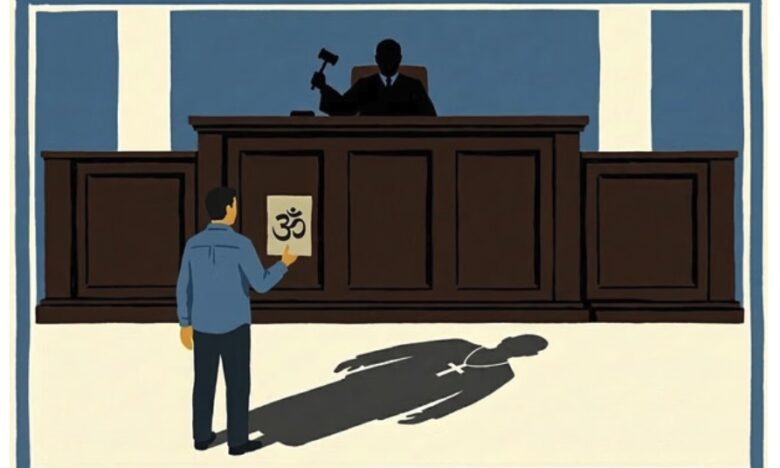
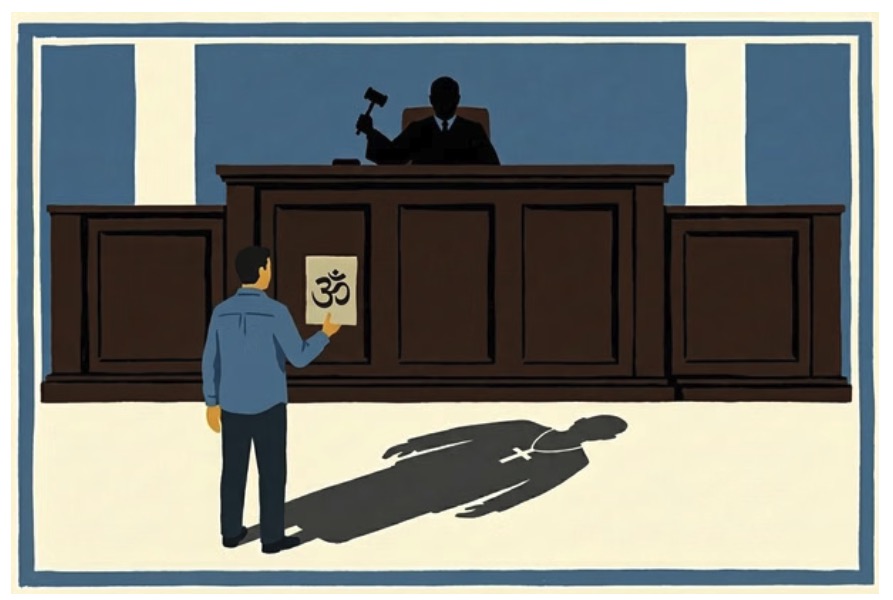
INDIA, March 9, 2026 (Swarajyamag): Is the Indian judiciary inadvertently supporting crypto-Christianity, where a convert to Christianity remains Hindu on paper in order to benefit from the various affirmative action programs of the government? A recent judgement of the Nagpur bench of the Bombay High Court ruled that the mere presence of a Jesus statue or the symbol of the cross at someone’s home cannot be seen as proof of conversion to Christianity. In a sense, this is true, since Hindus often have no objection to venerating the sacred symbols of other religions. But if the burden of proof for establishing conversion to Christianity is going to be set this high, it implies that the authorities need to be more intrusive in their investigations. Since this is not possible in every instance of suspected conversion, crypto-Christians can get a free ride and the best of both worlds: the benefits offered by their new faith, and the compensations offered by the faith they claim to have been oppressed by. On the one hand, they are free to criticise Hinduism for the caste system. On the other, they can claim to be victims of the caste system and benefit from reservations in jobs and educational institutions by remaining Hindu on paper.
The High Court bench said more proof is required to establish conversion, including baptism records or certificates. But quite apart from the fact that not all Christian denominations require a believer to undergo baptism (the Quakers and the Salvation Army have no such requirement), which church is going to cooperate with the caste-issuing authority by disclosing who has been baptised and who has not? The Supreme Court, by framing intrusive investigations into conversions as an assault on privacy, is effectively saying that the state must not probe a person’s faith too deeply, since Articles 25–30 promise freedom of conscience. The result is a legal environment where proving conversion has become harder and investigating it has become constitutionally suspect. For those who convert to Christianity but wish to retain Scheduled Caste status, this combination provides near-complete insulation. The burden falls entirely on an already overburdened state apparatus to prove what the individual and the church have every incentive to conceal.
More at source.
https://swarajyamag.com/ideas/are-indian-courts-making-crypto-christianity-impossible-to-prove

A daily summary of world news for Hindus and non-Hindus alike