
Finding the Perfect Himalayan Retreat
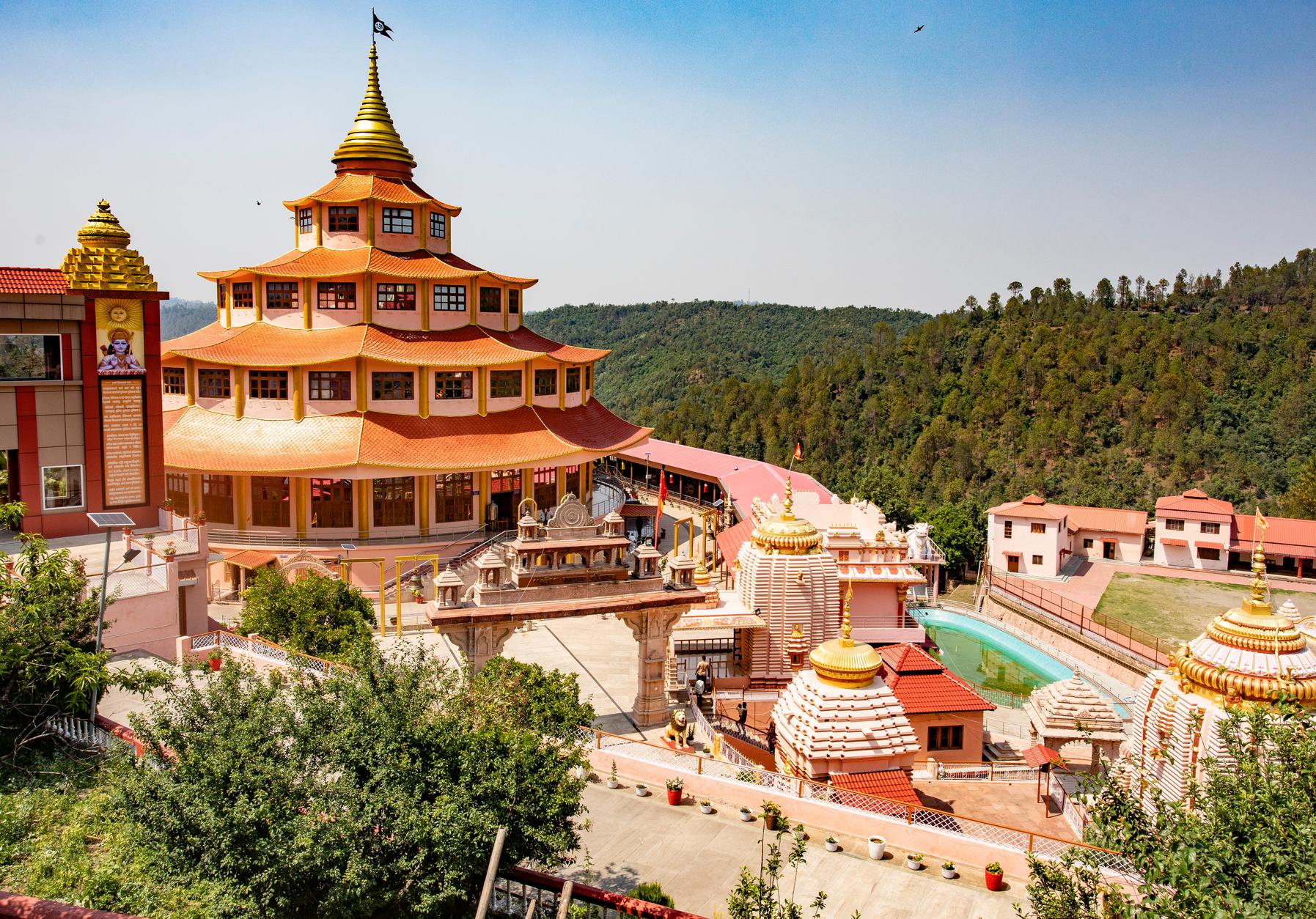
Stressed out by relentless personal and professional demands? One of these remote mountain hideaways may be just the place to rekindle your spirituality.
By Dev Raj Agarwal, Dehradun, India
It is easy to ascertain why the pristine environment of the Himalayas was chosen by saints, sages and wise men for deep meditation and communion with God. As Pandit Shriram Sharma Acharya puts it, “The Himalayas are not merely mountains—they are the Earth’s beating heart, where divine wisdom descends and human aspiration ascends. In their silence lives the voice of eternity.”
Amidst innumerable spiritual retreats spread across India in holy cities, along riverbanks and seashores, Rishikesh has always been a sought-after center of learning. Ashrams there include The Divine Life Society, Dayananda Ashram, Parmarth Niketan, Kailash Ashram and Omkarananda Ashram. But in recent years, the holy city has become overwhelmed by visitors, traffic and chaos.
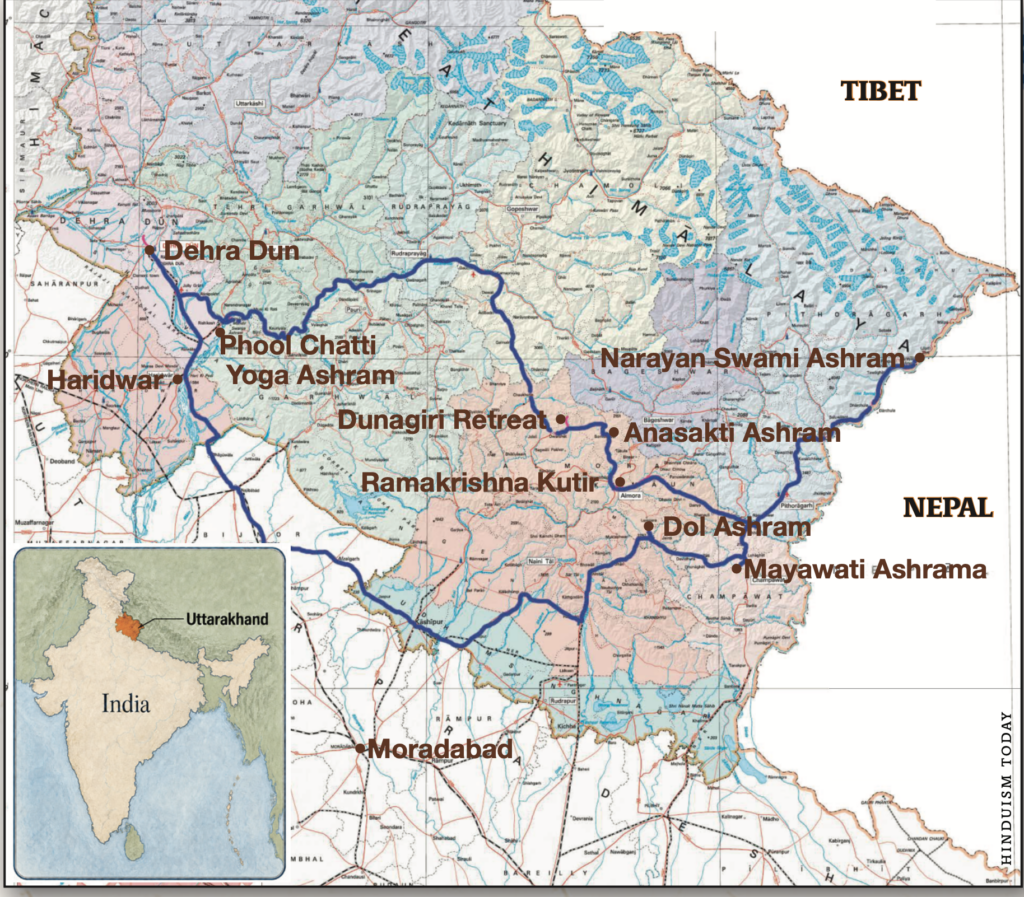
I felt it was time to explore more remote retreats in the Himalayan foothills, far from the hubbub of any city. In consultation with the editors of Hinduism Today, we decided to explore the Kumaon region, in eastern Uttarakhand. In recent centuries, Kumaon gave sanctuary to great saints like Swami Vivekananda, Swami Ram Tirtha, Mahatma Gandhi and Mahavatar Babaji, a central figure in Paramahansa Yogananda’s Kriya Yoga lineage.
Dol Ashram
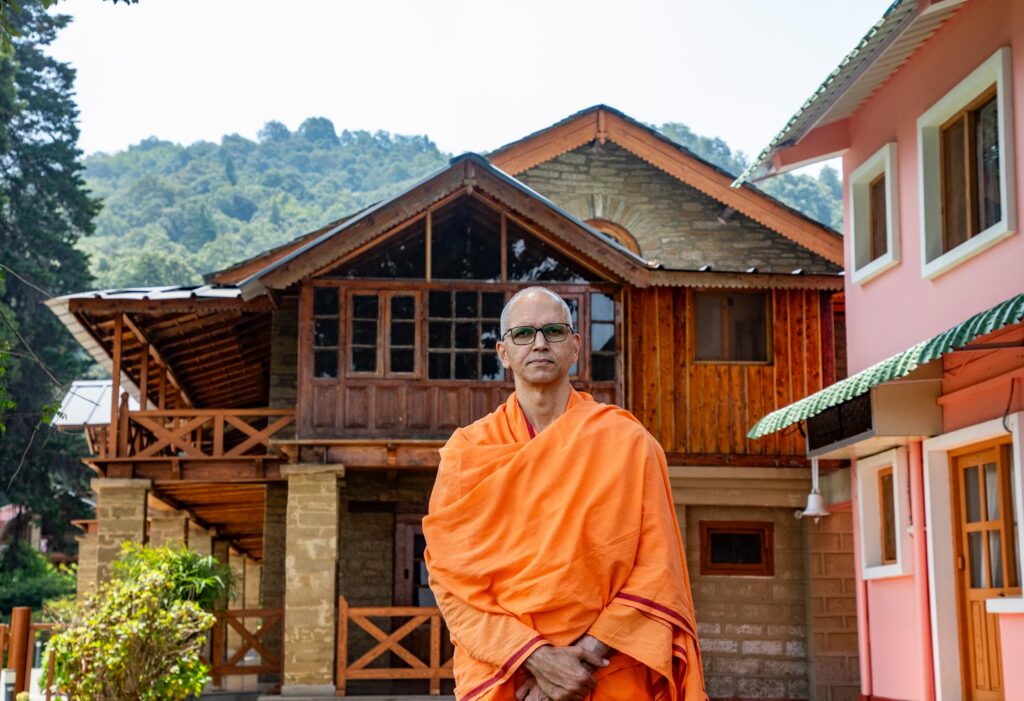
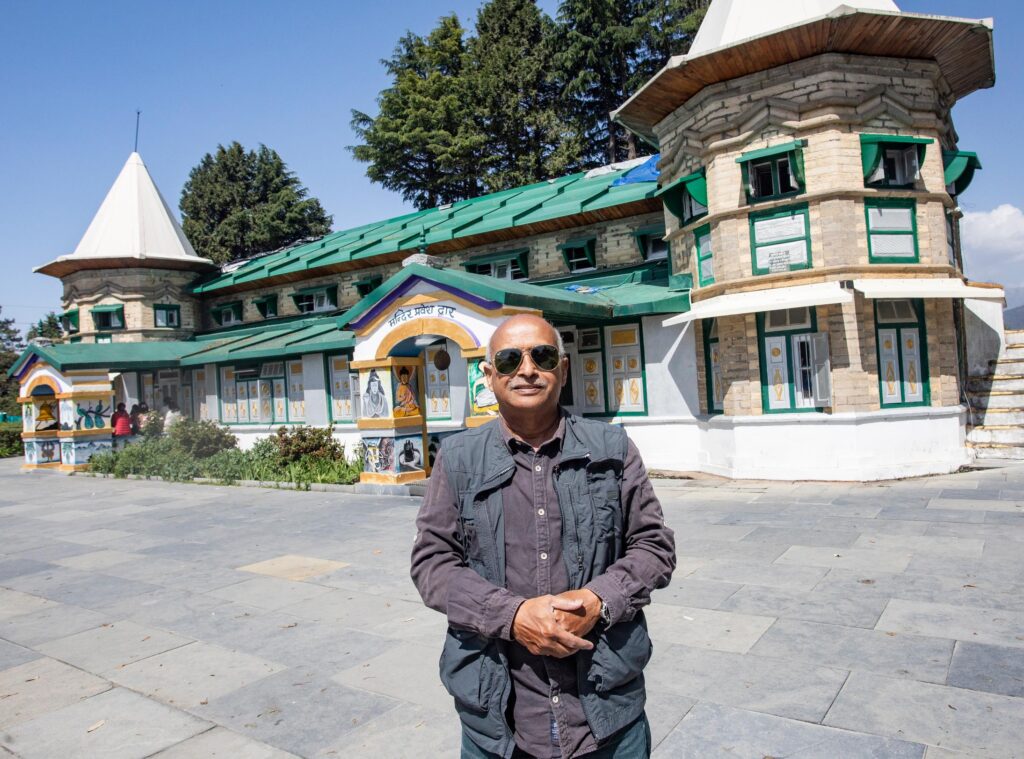
The concept of a spiritual retreat has recently come to include health and wellness programs that offer scant spiritual content. For this report, we highlight ashrams that retain a strong spiritual focus, especially those founded by saints and sages. I drove from my home in Dehradun to Bhimtal, then stopped in Almora at Dol Ashram (photo at left, map page 33). At an elevation of 5,500 feet, the ashram is situated in what is called the “Lesser Himalayas,” between the lower foothills and the actual mountains.
In this idyllic location—in a silent pine forest but not too far from a city—I met the head, Mahamandaleshwar Swami Visheshwarananda. Swami told of the ashram’s founding: Tapasvi Baba Kalyan Das passed by this place while returning from his second pilgrimage to the holy lake Manasarovar in Tibet. Inspired by a vision of Goddess Bhagavati, he established the ashram here in 1990, setting this guiding principle: “The Divine is not far from you. It lives in the silence of your own heart. Purify the mind through meditation and selfless service. When the mind becomes still, the guru within awakens.”
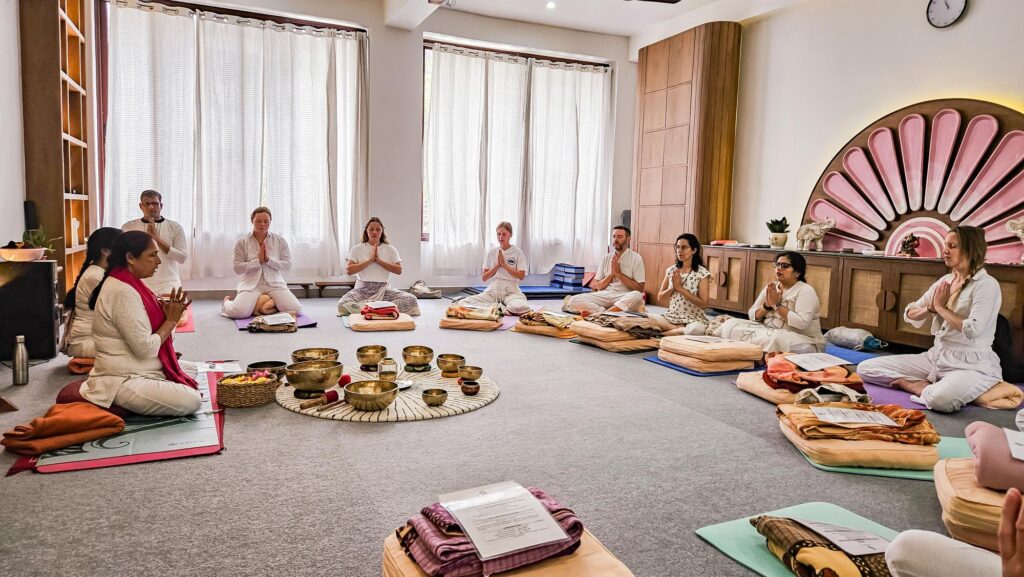
Today the ashram is run by the Shri Kalyanika Himalayan Dev Sthanam Trust. Visit www.shrikalyanika.com to learn what is offered. For physical balance there is fresh air, daily hatha yoga and pranayama. For mental calmness there is chanting of mantras and other mindful practices, plus the reduced sensory overload and minimal digital distraction. The meals here are pure vegetarian, as they are at every retreat in this report. Courses include guided meditation, scriptural recitations, selfless service, community living and interaction with teachers and spiritual guides, all aiming to foster spiritual growth. Multiple quiet spaces are available for self-study and reflection.
Over 25 temples grace the sprawling property. Built in various architectural styles, these honor Navdurga, Ganesha, Vishnu, Shiva, Maa Bhagwati, Hanuman and others. There are beautiful quarters for visiting swamis, a huge satsang hall, a meditation hall and a well-stocked library. In a pagoda-style building called Shri Dhyan Peetham, a circular hall with a high ceiling contains a 1.6-ton Sri Yantra, believed to be the largest in the world. Seekers meditate in the spiritually charged surroundings.
Dol Ashram offers four kinds of retreats. The first one includes beginning practices such as pranayama, the second intensifies one’s practice of hatha yoga, the third focuses on health issues and the fourth is for serious spiritual seekers. The cost ranges from $160 to $420, depending on the length of stay—three, seven or ten days. There are 45 double- or triple-occupancy rooms and three dormitories with 10 to 15 beds each. The daily schedule starts at 4:30am and ends at 8:30pm.
The weather here is pleasant much of the year, but these are the Himalayas: serious storms and shifts in temperature are possible any time of the year. Visitors especially should avoid monsoon season, from mid-June to mid-September.
I spoke with visitors. Sarita Pandey and her husband had just arrived from Chhattisgarh. They first met Baba Kalyan Das in 1985 in Amarkantak, where Babaji has his main ashram in the lap of Narmada Valley. “I had no idea who I was before I met Babaji,” she recalls. She says that through the guru she found herself in Devbhoomi, the land of Gods in the Himalayas.
Young Hem Raj came to Dol Ashram as a job aspirant, but dedicated his life to service after reading Sadhana Yatra, the biography of Baba Kalyan Das. He remembers, “I had found what I was hunting for. The fear and anxiety that always haunted me were gone after I took diksha (initiation) and started working and living here.”
Dol Ashram is a great choice for serious seekers as well as newcomers who wish to get a sense of a spiritual way of life along with some comfort and freedom.
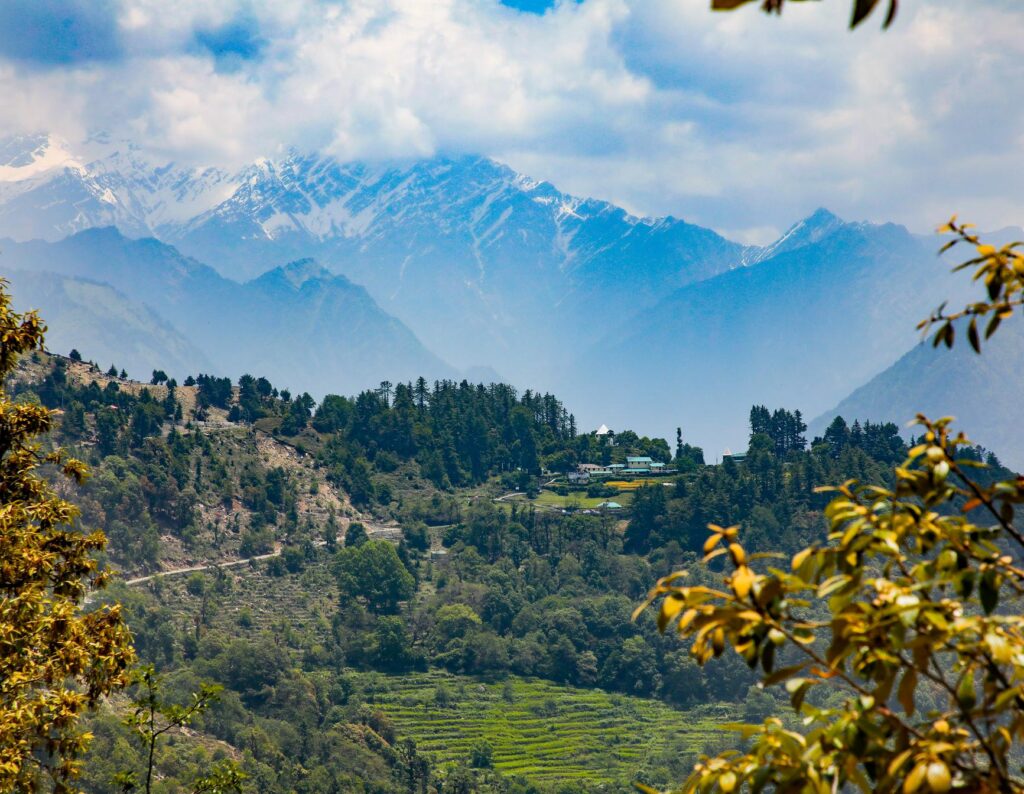
Narayan Ashram. Photo: Dev Raj Agarwal.
Advaita Ashrama, Mayavati
A pleasant road trip took me to the old town of Lohaghat, close to the border of Nepal, and just over six miles more to Advaita Ashrama at Mayavati (www.advaitaashrama.org). Meditating here should be the ultimate goal of a serious seeker. At 6,400 feet, tall cedars and oaks surround the ashram on all sides. The boundless stillness of the place elevates human consciousness.
A narrow winding road through the forest takes you to the ashram gate. Inside, one first notices the rustic charm of the gardens, old buildings, halls and rooms, all retaining their pristine glory. Wooden terraces, mud-smeared walls, age-old electric fittings, everything seems unchanged from when the ashram was built more than a century ago.
Swami Shuddhidananda, president of Advaita Ashrama, Mayavati, tells me the ashram was founded by Swami Vivekananda in 1899. Having seen the beauty of the Swiss Alps during his travels, he expressed a wish to have an ashram in the lap of the Himalayas in India. Determined to fulfill the wish of the guru, his disciples Captain James Henry Sevier and Charlotte Sevier chose this place. At that time the living conditions were very harsh, with no decent roads, no electricity, no hospital or any other facility. There was an acute scarcity of food. When James Sevier passed away within a year after the ashram came up, Swami Vivekananda came here to console Mrs. Sevier in January 1901 and stayed for 15 days. Thus the ashram was sanctified by the great spiritual teacher.
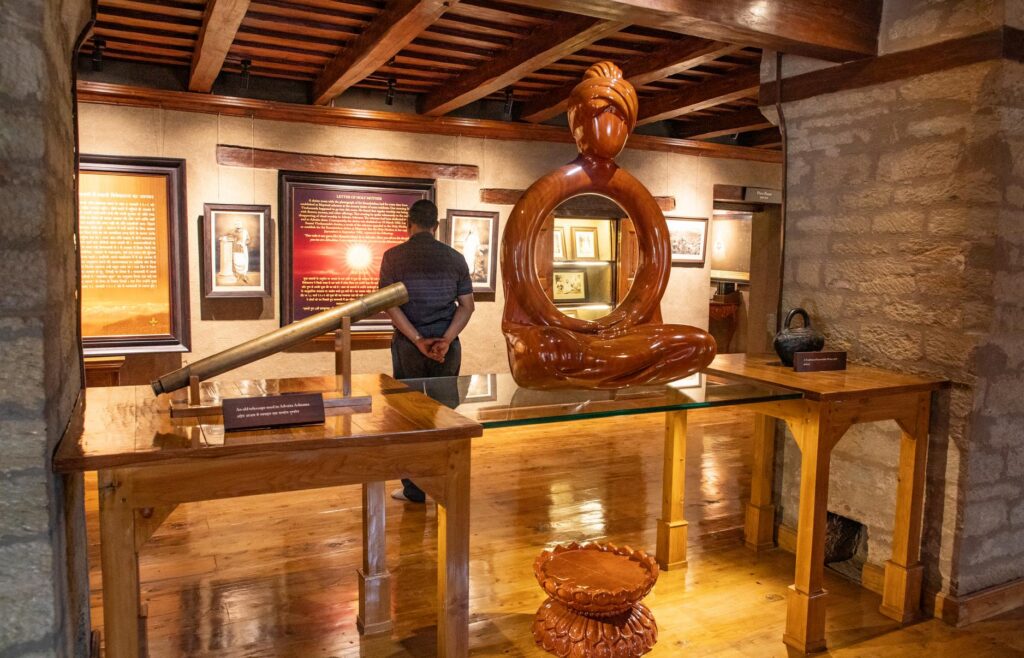
The meditation hall where Vivekananda meditated is still the same. He dedicated this ashram entirely to practicing and preaching Advaita Vedanta. Thus, he did not want any temples or rituals based upon dualistic ideas. There are no forms or rituals—only the methodology of the Upanishads, going straight to the true nature of the human being, the Atman. This ashram became the publication hub of the Ramakrishna Mission, producing the majority of its books, including the Complete Works of Swami Vivekananda.
When asked, Swami Shuddhidananda explained that there are no differences of ideology between Advaita Ashrama at Mayavati and other RK Mission centers: “When you are looking at the ultimate reality from a great distance, it is dualism. When you are a little closer, it is qualified non-dualism. Finally, when you come extremely close, it is non-dualism. It is only the distance from which you are looking at the reality. We are looking at God from a distance so it appears as if God is different and we are different. As we evolve and grow in spiritual life, we come closer and the difference reduces. Finally, you will see that you and the entity you are worshiping are actually one.”
The ashram has a library, a bookstore and a charming museum which is devoted to the life and times of Swami Vivekananda. Visitors can meditate in the place where Swamiji himself meditated.
A total of 250 seekers attend the retreats here every year in batches of 20. Participants are chosen after their online applications are carefully scrutinized to evaluate each applicant’s seriousness and spiritual bent. The curriculum is based on Vedantic texts, with some variation depending on the interest of participants.
Accommodation facilities are of two types. General visitors, mostly admirers of Swami Vivekananda and Advaita philosophy, are allowed to stay for a maximum of three days free of cost. They are welcome to make donations on their departure. Seven- and ten-day retreats cost $104, irrespective of nationality. This includes boarding and lodging in individual rooms.
Narayan Swami Ashram
Along the road to Narayan Swami Ashram is Pithoragarh, a large city in an open valley with a splendid view of Nanda Devi mountain. A little farther is Jauljibi, a border town where the Gori and Kali Rivers meet. One can talk with people in Nepal across the Kali River. From here, the road to Narayan Ashram runs along the India-Nepal border, with the ashram just 30 miles from Tibet. Heavy downpour made it impossible to reach Narayan Ashram in the night. I got a call from Mr. Rana at the ashram, and he strictly told me to stay overnight in Dharchula, some 15 miles past Jauljibi.
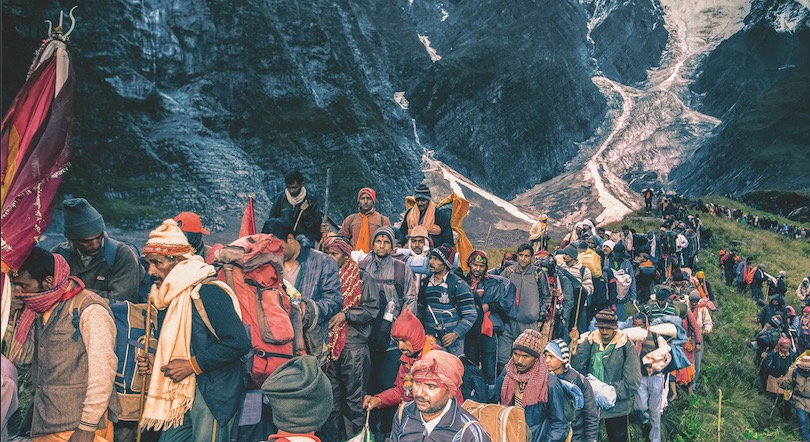
The next morning his reasons became clear. The 32-mile drive to the ashram took a full four hours. In places, the road all but disappeared. Huge boulders blocked it elsewhere. Potholes as deep as a foot were a nightmare to drive across. Finally, I was able to see the iconic building of the ashram against the faint background of snowy mountains.
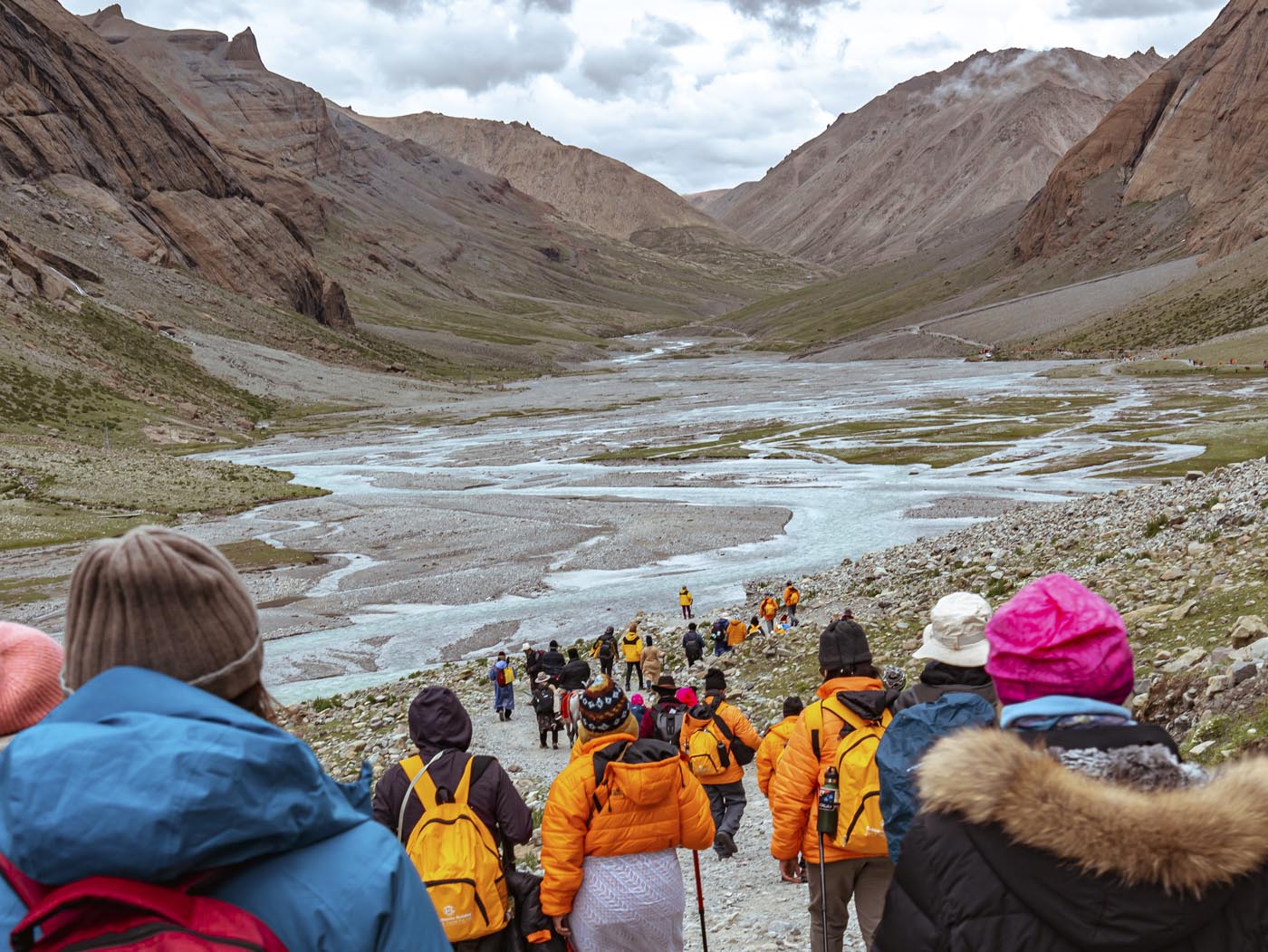
Known for its serene, picturesque surroundings at an elevation of 9,000 feet, this is one of India’s most remote ashrams. It was a stopping place on a traditional pilgrimage route to Lake Manasarovar and Mount Kailash in Tibet. It was also an important halt for Bhotia traders on the ancient trade route between India and Tibet. Across the Kali River, villages of Nepal overlook the ashram. With the recent lifting of travel restrictions near the border, the area has become more accessible to pilgrims, hikers and nature lovers, attracting greater attention to the ashram.
Narayan Swami, a civil engineer belonging to the royal family of Mysore, came to Dharchula in 1935 on his way from Karnataka to the Kailash Yatra. He was shocked to see how backward this part of the country was, with no roads, schools or hospitals.
After overcoming many hardships, Swami founded Narayan Ashram in 1940. He was tireless in his philanthropic work. He established a township named Narayan Nagar near Askot. He founded new schools, hospitals and other infrastructure facilities across Kumaon. He gave special emphasis to education. Brilliant students were given scholarships. The ashram still supports the academic pursuits of many students.
The resident acharya now is Swami Tadrupananda Saraswati, supported by his disciple Mata Tanmayananda Saraswati. They conduct seven-day retreats during the summer, with classes on Vedanta, Upanishads, meditation and yoga. Guests can meditate in any of four temples or a specific meditation area. Serious participants may choose to meditate in the open field above the ashram. People are welcome to come independently for meditation and sadhana with prior reservation.
Narayan Ashram is among the simplest and least luxurious retreat centers. There is living space for 50 to 60 people, including 12 private rooms and a few dormitories. The rooms and dining area are very basic. Despite this, nearly 400 serious aspirants visit the ashram in a year, and there is a long waiting list. Participants for each retreat are selected by the board from mailed applications that detail the individual’s background and motives. Daily rates vary by accommodation, ranging from $8 to $13 for a room with meals and $6 for a dormitory bed.
The ashram is supported by donations from thousands of devotees, including the big industrial houses in Gujarat and elsewhere. To increase self-reliance, the ashram grows vegetables, fruits and medicinal herbs.
Under the ashram’s policy, the board wishes to avoid publicity other than word of mouth. It has no website. For reservations, one must apply by email to the president of Narayan Ashram Trust, Ramesh Pethani: pethanirp@gmail.com.
Ramakrishna Kutir, Almora
Swami Vivekananda called Almora the holiest place, because Goddess Parvati was born here. “These mountains are associated with the best memories of our race. Here, therefore, must be one of those centers, not merely of activity, but more of calmness, of meditation and of peace. And I hope someday to realize it.” He expressed this wish to establish an ashram in Almora during his visit to the town in 1897.
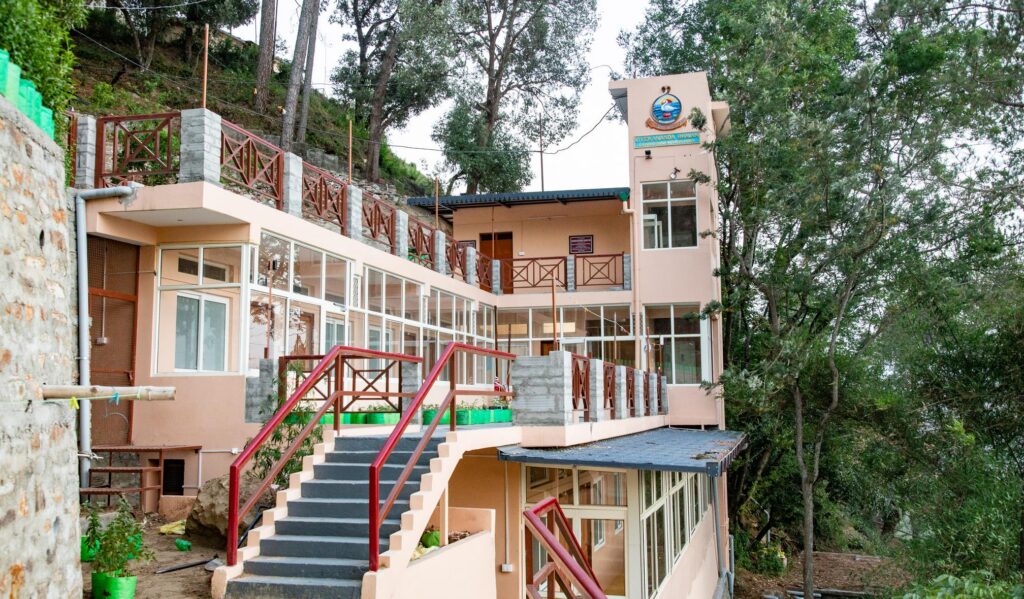
Situated on the southwestern edge of Almora, the Ramakrishna Kutir is a conglomeration of medium and small buildings, old and new, on a very steep slope. One is instantly impressed by the boundless stillness of the environs.
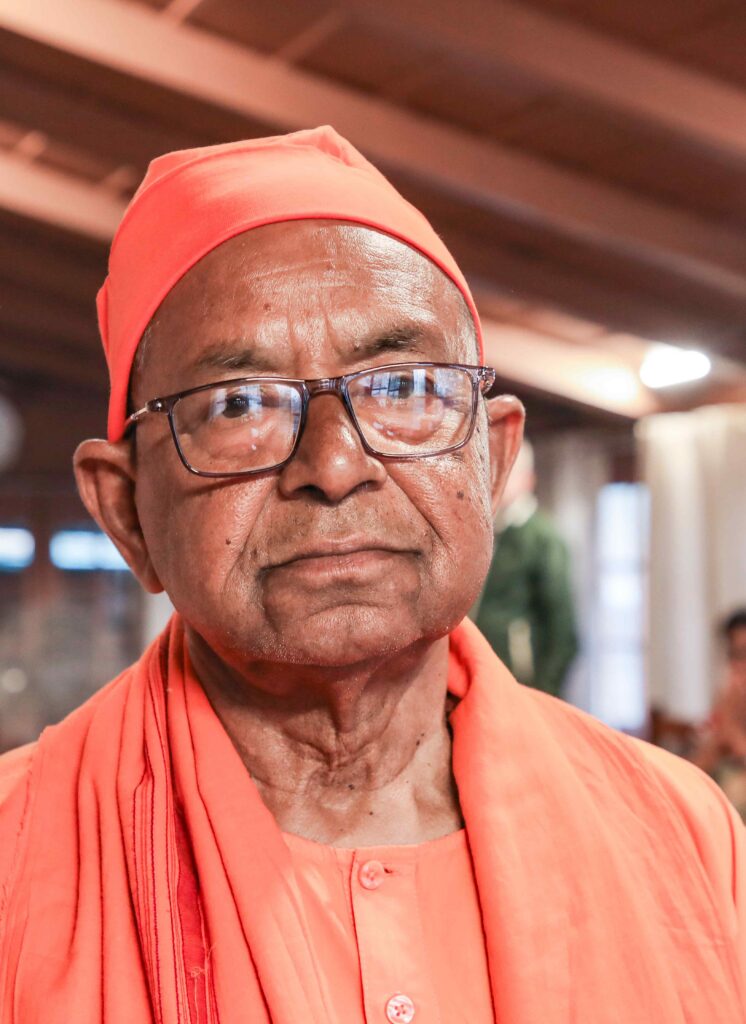
As with Advaita Ashrama at Mayavati, great care has been taken to restore and maintain all the old buildings in their quaint glory. A specialized restoration architect was hired for this job. Along with many places for meditation and self-study, there is a bookstore, a library, lecture and meditation halls.
Of particular importance is Vivekananda Bhawan, which houses students from nearby towns while they pursue their studies. Scholarships are available for those who qualify to attend universities for higher studies, with all expenses paid by the ashram. At present, there are 40 students studying with the ashram’s support.
One can join the retreats by applying on the website, almora.rkmm.org. There are classes on Vedic scriptures for aspirants who want to learn from an acharya in the traditional way. The daily routine at the retreat includes Vedic chanting, meditation and prayers. Visitors are expected to maintain silence on campus.
Visitors staying one or two nights may do so free of cost. Otherwise, paid stays range from three to ten days, with longer stays available to retreat participants. Accommodations include 20 private rooms, large four-bed rooms and dormitories. The cost of a retreat ranges from $100 to $200. Please be aware that a lot of climbing up and down is involved here, though there is an elevator from the main road to get up to the top.
Anasakti Ashram, Kausani
Located in an area of Uttarakhand long associated with spiritual retreats, Anasakti Ashram is known for its association with Mahatma Gandhi. The main objective of the ashram is to promote the ideology of Gandhi and inspire people to adopt the path of nonviolence. With modernization and changing lifestyles, the ashram is gradually losing popularity. With its ultra-basic amenities, it is an excellent option for an economical stay and meditation for someone on a shoestring budget. Its key features are tranquility and the sprawling lawn looking out on the Himalayas, offering a splendid view of the snowy peaks.
There are 18 basic rooms, a dormitory, conference hall and the Gandhi Museum, with no separate area for yoga or meditation. About 700 people stay in the ashram in a year, paying $9 for a double bedroom or $2.60 for a bed in the dormitory. The ashram depends solely on visitor income and donations. There is a small but well-stocked store of khadi (hand-woven) garments. It is a great choice for an economical stay in a tourist place or to spend time in a peaceful environment.
Dunagiri Retreat
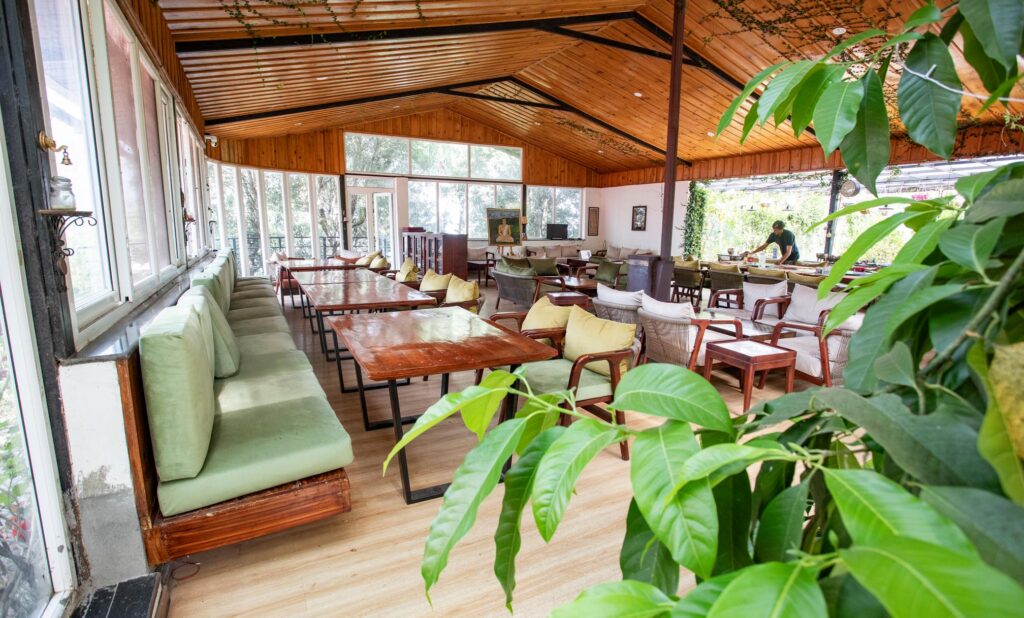
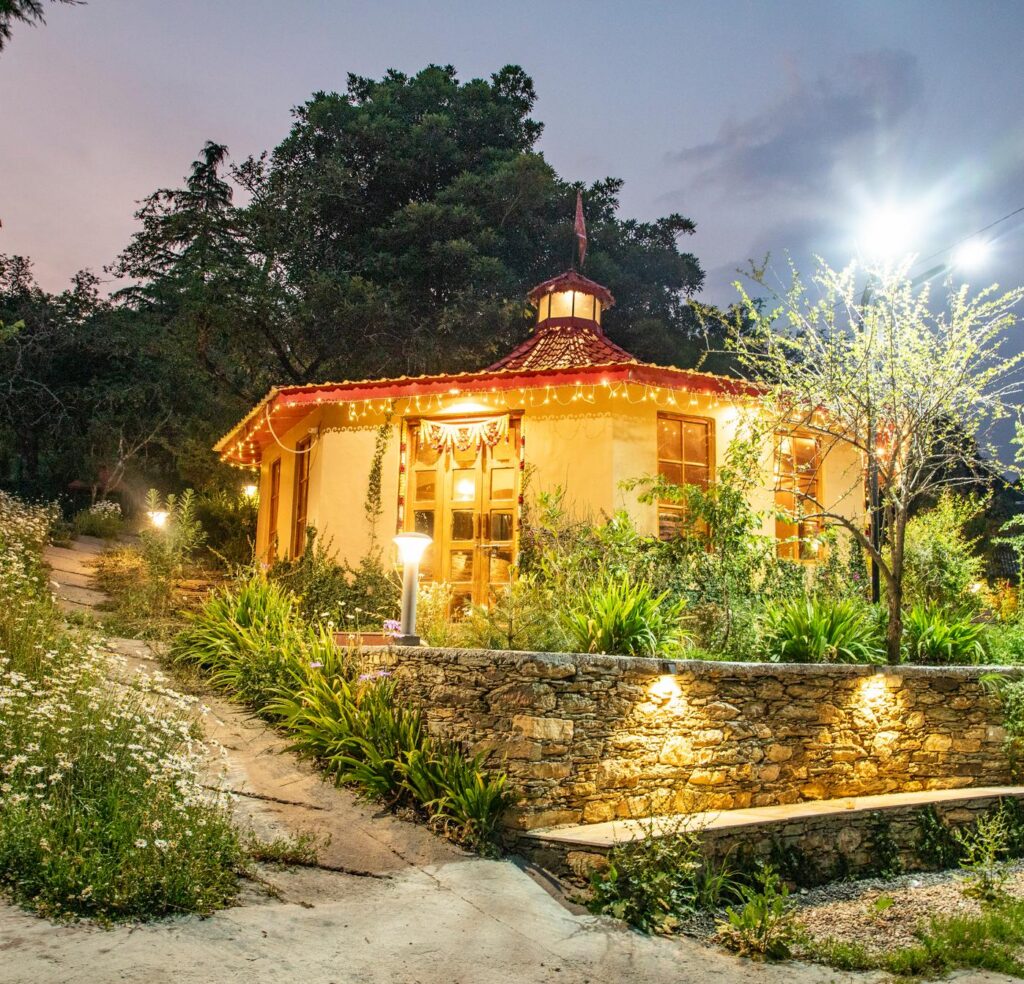
This is not an ashram—there are no resident swamis—but a high-end private facility (dunagiri.com) surrounded by lush forests that overlook the undulating landscape of the valley and the high Himalayas. It is just a mile from the Dunagiri Temple and near the cave of Mahavatar Babaji where he initiated Lahiri Mahasaya into Kriya Yoga. The retreat is open to nature enthusiasts, devotees of Mahavatar Babaji and spiritual seekers. It has a Mahavatar Babaji temple and meditation hall, a beautiful dining hall, a yoga hall and pyramid hall for meditation and worship of the divine feminine in the ancient traditions of Dunagiri.
Piyush Kumar, the owner, describes it as “a safe place for devotees who can experience and benefit from the amazing spiritual vibrations of this place.”
The retreat programs, about 30 a year, are run by teachers who lead visiting groups and may rent the entire facility. The cost of the retreat and accommodations depends on the teacher. The property has 23 luxurious double bedrooms with private bathrooms. A room with meals costs $157 plus tax per night for casual visitors. Individuals can meditate in any of the facilities and trek to Mahavatar Babaji’s cave or the Dunagiri Temple. The place is great for walks through the forest.
Phool Chatti Yoga Ashram
Phool Chatti Yoga Ashram (phoolchattiyoga.com), just nine miles from Rishikesh, is situated on an ancient yatra route, high on the right bank of the river, providing both the silence of the mountains and Ma Ganga’s divine darshan.
I met Lalita Nand and Meenakshi in the ashram’s imposing lobby. Meenakshi oversees administration, while Lalita conducts yoga retreats. Lalita came here 30 years ago, following 35 years of largely self-directed study. She has studied yoga at the Bihar School of Yoga, which follows the most conservative traditions.
The ashram was founded around 1885, when a saint named Baba Devi Dayal established a hut and sacred fire here on his return from Badrinath. He spent part of his time feeding pilgrims in the remote forest. Baba was joined by Swami Vishudhanand, a doctor by profession who rendered medical help to the local people, including homemade ayurvedic medicines. He also developed an orchard of fruit trees. Over time, with the help of villagers, the ashram took shape.
The present head, Swami Dev Swarupanand, has transformed the place into a sophisticated retreat center. The daily cost is $52 to $84; a week-long retreat per person is $570.
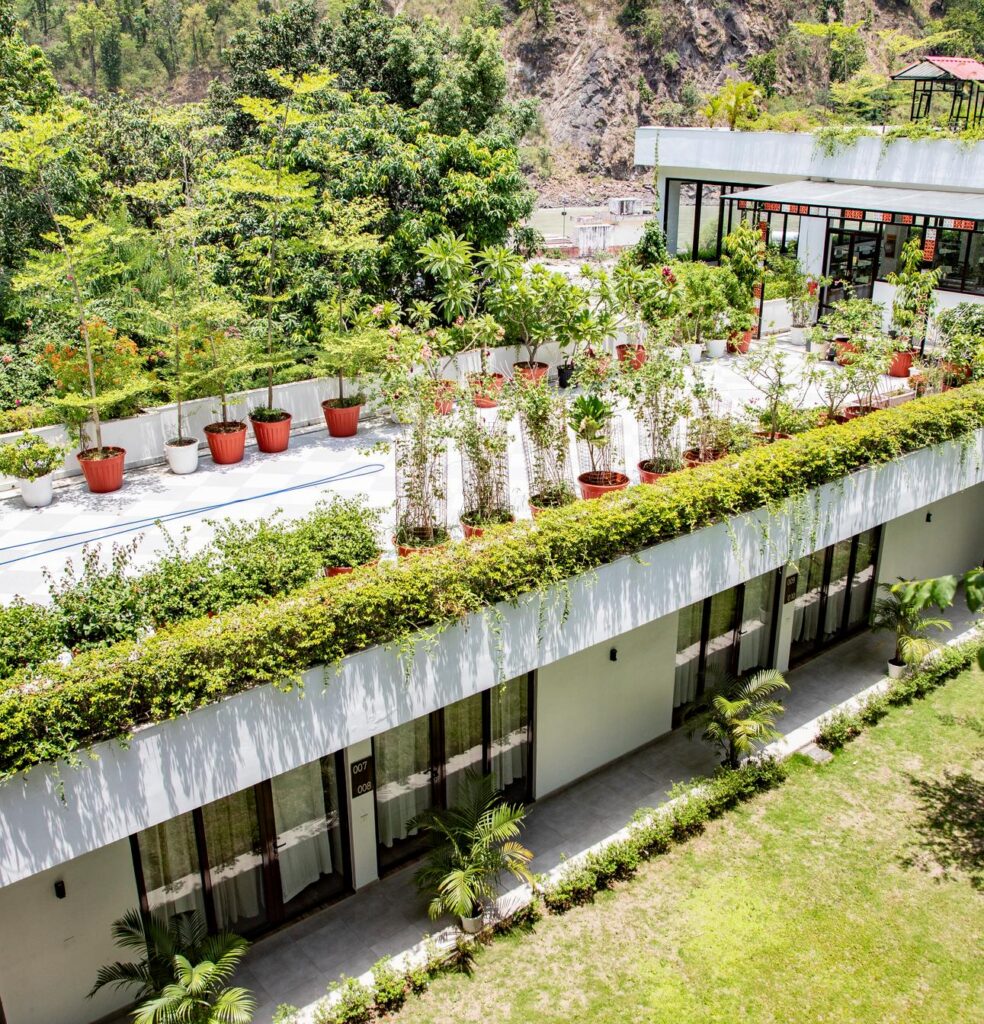
Today’s facility boasts a spacious lobby, yoga and meditation halls, the library, a new building with rooms for guests, a massive dining hall and terraced spaces overlooking the Ganga Valley. The ashram has a beautiful garden and many kinds of fruit trees.
Conclusion
The last few decades have brought tremendous changes in lifestyle and work culture. Life is now more hectic and stressful, with challenges to cope with and deadlines to be met at work. Physical and spiritual refinement, good health and stress-free time are the needs of the hour for people across the globe, needs that can be met by spiritual retreat centers. India is a favorite destination for such pilgrimages, with many sites for spending quality learning time, getting rid of fatigue and stress and replenishing mental and physical energies.
Literally thousands of places now offer such services. The first task is choosing the right one for you. If your goal is to have an authentic spiritual experience, then an ashram-based retreat is the best choice. These have formal yoga and meditative programs with rules to be followed. When exploring options, carefully check the location, accessibility, Internet and banking facilities. Many retreats have long waiting lists, so you may need to register months ahead of time.
Selecting a more flexible private retreat is easier, as there are many more of these in beautiful locations and moderate climates. They cater to a wide audience, offering a range of services—from spiritual studies to yoga, health, stress relief and ayurvedic treatment facilities. Such retreats are easier to book, but more expensive, as they offer better facilities and cuisine.
As a final note, I should emphasize that the weather can be totally unpredictable in the Himalayas. Sudden spells of heavy rains may result in traffic jams and even serious landslides that block roads and interrupt travel plans—both of which I experienced preparing this report. One should allow extra time to deal with such adverse situations.
Just What Is a “Retreat” These Days?
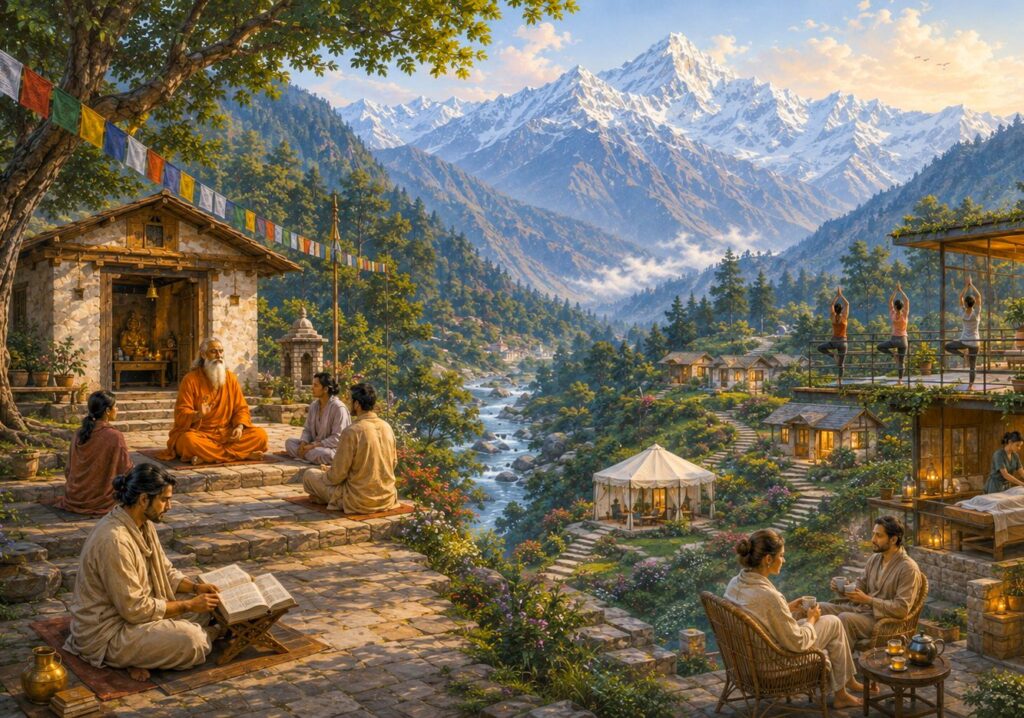
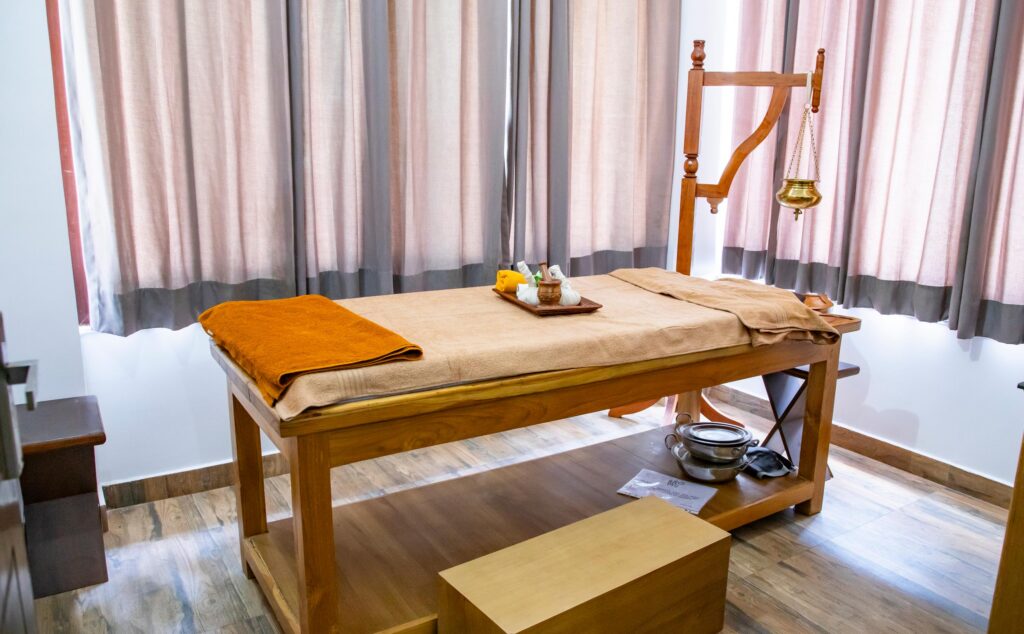
Until a few decades ago, retreats were generally held at ashrams where the focus was meditation, study of scriptures and self-realization, usually under the guidance of a resident swami. That is the type of retreat we have covered in this article. But with time, the concept of “retreat” has been greatly expanded to cater to a much wider audience. Now there are retreats specializing in providing solutions to clients with physical fitness issues, therapeutic retreats to help clients through yogic exercises and panchakarma treatments involving massage, steam therapy and various cleansing routines. There are paid facilitators of all kinds to help clients get rid of stress, anxiety and lack of confidence. Many people are opting to spend time in retreats to relax, to get away from their mundane and very hectic urban schedules. They are trying to reduce their stress levels by rejuvenating themselves in a peaceful place in preparation for going back to work. Some are searching for solutions to overcome immediate physical or mental problems.
Such clients can choose from nominally priced basic facilities to high-end, five-star accommodations. These tend to follow one of two patterns: some have in-house teachers and instructors, while others are booked by outside teachers who bring in their clients to use the facility. The surroundings of a property, accessibility, weather, in-house facilities offered, standard of accommodation and quality of food are some of the key factors determining the rates of retreat courses and accommodation.
It is very important to investigate carefully when choosing a retreat. One must read the retreats’ respective websites and use social media platforms to find what clients say. Read reviews thoroughly and contact the retreat for information.
One thing remains unchanged: for a serious person with an urge to find inner peace, learn from scriptural texts and meditate, an ashram-based retreat will work best.
Advaita Ashrama, Mayawati
Ramakrishna Kutir, Almora
The Remote Narayan Swami Ashram
Mahavatar Baba’s Profound Temple
High-End Phoolchati Yoga Ashram
About The Author
Dev Raj Agarwal of Dehradun, India, is a photographer who loves to capture Bharat’s immense diversity of people, cultures and nature, especially in the Himalayas. Email: devrajagarwal44@gmail.com

Leave a Comment