
Maintaining Hindu Identity For the Next Generation
How to ensure our children’s religious future
By Dr. Jai G. Bansal
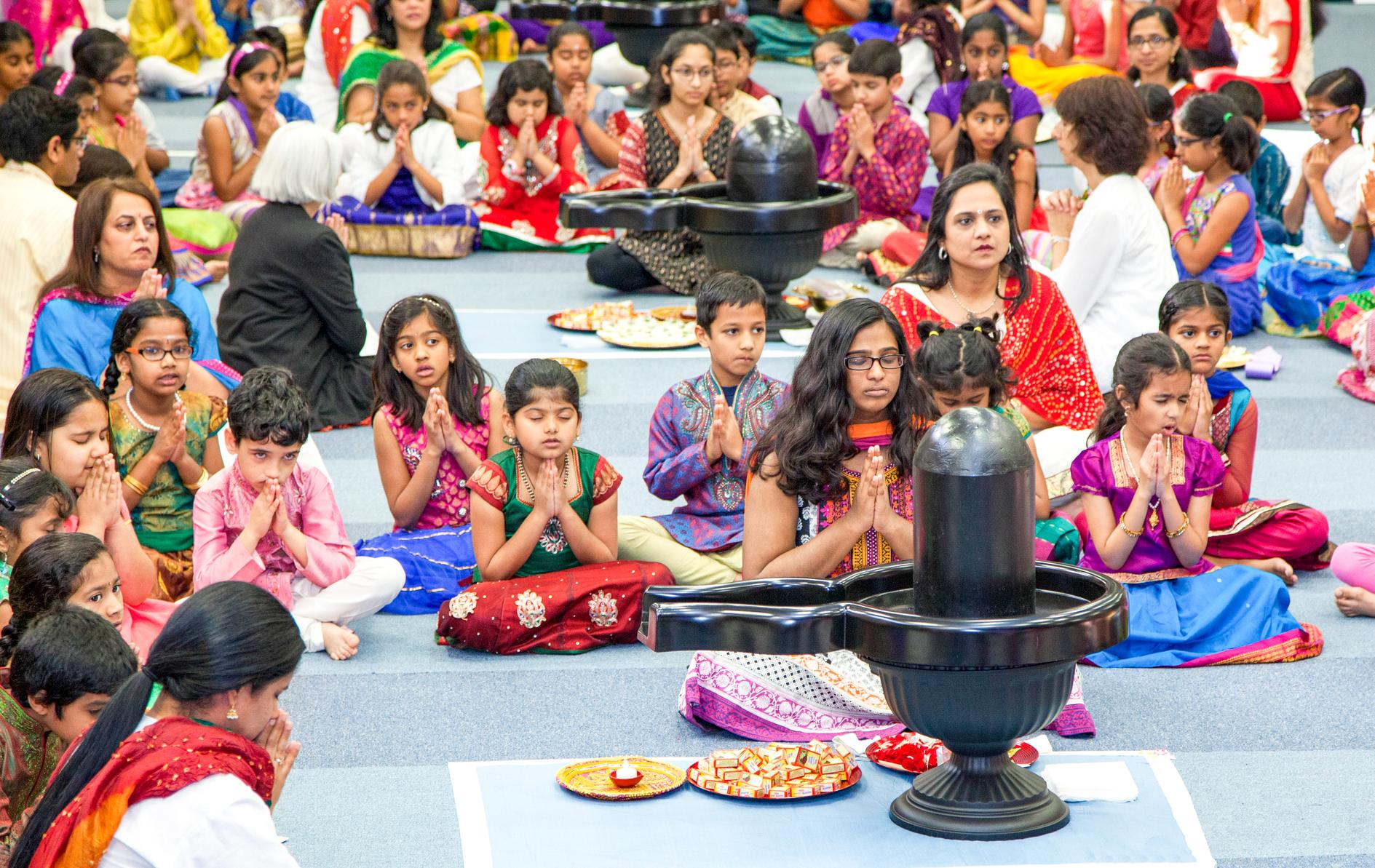
Across the hindu diaspora in the united States, a troubling pattern is emerging. Temples are expanding, festivals draw large crowds and Hindu identity is more publicly visible than in earlier decades. Yet beneath this outward confidence, a quiet erosion is taking place. Many Hindu children raised in the United States grow up with a shallow familiarity with Hindu heritage and a weak connection to dharma as a lived way of life.
This gap is visible in everyday behavior. Children may attend temples for years yet struggle to explain basic rituals. Festivals are experienced as episodic events rather than grounding rhythms. Young adults often identify culturally as Hindu but lack the language, practices or confidence to carry that inheritance forward.
The upbringing model many Hindu parents reproduce in the United States was shaped in post-1960s urban India, where Hindu dharma functioned less as something deliberately taught and more as an ambient presence woven into everyday life. It was not treated as a subject of instruction but as a background reality. In many middle-class households, there was little structured prayer, regular scriptural study or explicit teaching of our complex Hindu history. Children learned through participation rather than explanation, joining festivals, rituals and life-cycle ceremonies without being clearly taught their meaning.
In India, this posed few problems. Hindu society operated as the majority culture, in which everyday life itself provided constant reinforcement. The calendar followed Hindu rhythms, and public life, language, food habits and social customs carried dharmic references. Understanding could remain implicit because the surrounding environment sustained it. As a result, Hindu dharma appeared self-perpetuating, requiring little intentional transmission.
In the American context, however, this model is often reproduced without adjustment, even though the conditions are entirely different. Assumptions formed in a majority environment continue to guide household life in a minority setting. Hindu dharma in the home, therefore, remains informal and episodic rather than consciously taught and practiced.
Daily routines in many households are not organized around dharmic practice. Images of Deities may be present, but they function largely as markers of identity rather than anchors of habit. Prayer is irregular, engagement with texts is limited, and the deeper roots of Hindu tradition are rarely explored in a sustained way. Hindu culture surfaces mainly during festivals or family ceremonies, instead of shaping everyday language, moral reference points and expectations. Children become familiar with outward forms while lacking a deeper understanding.
Temples often play a similar role. They are respected and valued but treated primarily as devotional or cultural spaces rather than centers of learning. Visits are tied to festivals, milestones and moments of personal need. Even with regular attendance, children are seldom guided through the meaning of rituals or the teachings and tradition behind them. Participation remains largely observational.
In India, these gaps were offset by the wider social environment. In the United States, there is no such reinforcement. Schools, peers, media and public life reflect different norms. When a minimal, non-intentional model of heritage is carried over into this setting, the outcome is predictable. Hindu dharma appears present but peripheral, acknowledged occasionally rather than lived as a shaping framework. This quiet replication sets the stage for erosion long before questions of belief or identity arise, even in households that are sincere and culturally proud.
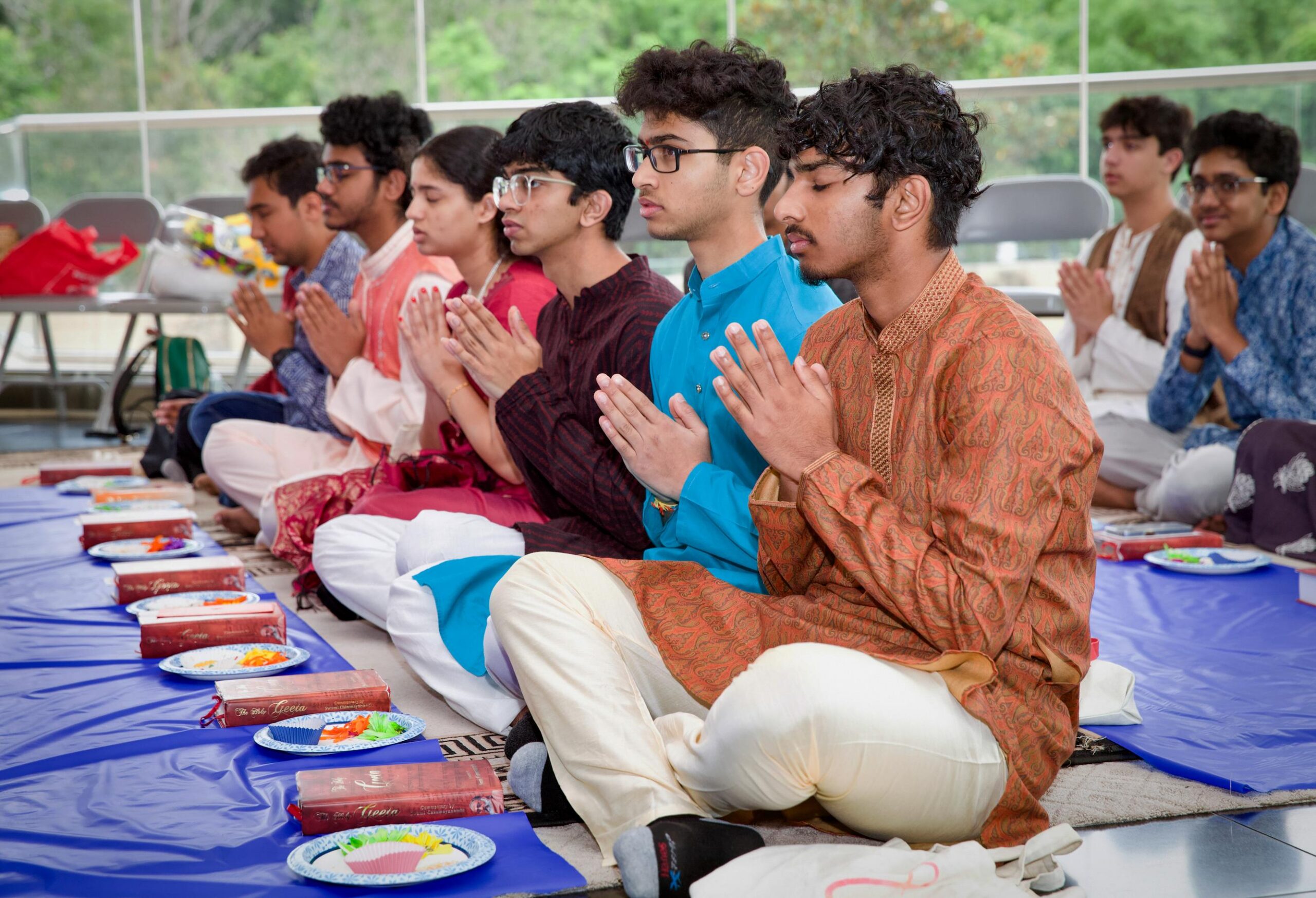
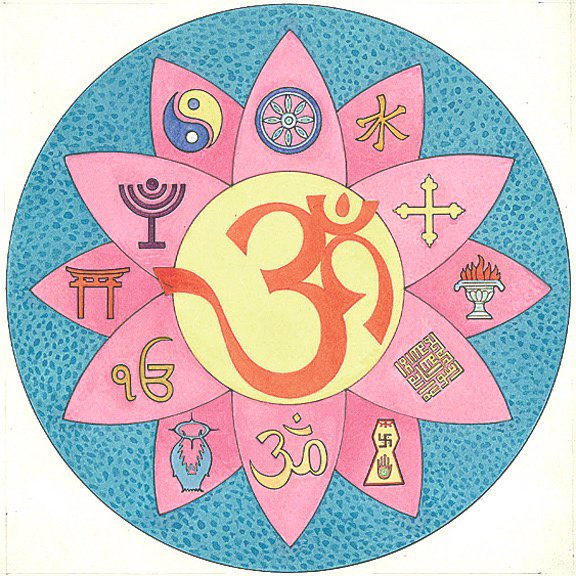
Alongside inherited habits, another pattern weakens the passing on of Hindu dharma in the United States: the tendency to soften or erase real differences, both within households and across institutions. Phrases such as all traditions are the same or Im spiritual, not religious are often presented as gestures of openness. In practice, they leave children unclear about what their own dharmic inheritance actually consists of.
Traditions endure through clarity. Hindu dharma is not a loose collection of values or sentiments, but a way of life shaped by distinct narratives, ritual systems, ethical duties and the accumulated memory of thousands of years of history. When these features are treated as interchangeable or secondary, inheritance becomes optional. Rituals are practiced selectively, texts reduced to general wisdom and festivals recast as cultural events rather than rhythms that organize family life. Children may recognize symbols, but they are not equipped to understand them.
This flattening of difference does not operate evenly. In a society where Christian-derived norms already shape public life, school calendars and moral language, minimizing distinction does not produce neutrality. The dominant framework continues to provide structure, while minority traditions dissolve into abstraction. Children do not grow up choosing among equal paths; they grow up inside one system, with others appearing supplementary.
These patterns are reinforced institutionally. For many Hindu families, temples and community organizations are the primary, and sometimes only, formal sites of engagement with Hindu dharma. Yet institutional life often mirrors the same reluctance to teach clearly. In an effort to remain inclusive and avoid conflict, programming emphasizes celebration over instruction. Festivals, cultural events and devotional gatherings dominate calendars, while sustained learning, curriculum development and teacher preparation receive far less attention.
Over time, this emphasis reshapes expectations. Temples become places of affirmation rather than deep teaching. Youth programs offer exposure and general values but rarely provide sustained grounding in dharmic ideas or the traditions that shaped them. Children learn how to attend and participate, but not how to understand or explain what they are doing. The result is not inter-tradition harmony but gradual cultural amnesia. Hindu dharma does not disappear through rejection but through erosion, when difference is no longer named, explained and lived.
Even where families and institutions fall short, the consequences might remain limited in a neutral setting. In the American context, however, Hindu children encounter an educational narrative shaped by colonial and missionary frameworks that presents their civilizational inheritance less as a tradition to be understood and more as a social problem to be interpreted and judged.
At the K–12 level, Hindu civilization is commonly introduced through a narrow and reductive lens. Caste, hierarchy and oppression are emphasized as defining features, treated as fixed and timeless realities rather than historically contingent categories shaped by colonial interpretation. This framing marginalizes the philosophical diversity, ethical systems, internal debates and reform traditions within Hindu thought, presenting the tradition as static rather than evolving. At the same time, Hindu contributions to mathematics, astronomy, linguistics and logic are routinely absorbed into the Western intellectual canon without attribution. As controversies surrounding school textbooks in California have shown, Hinduism is often portrayed as a case study in social injustice, while its intellectual legacy is quietly erased, producing a skewed and incomplete account.
At the university level, these patterns intensify. In the humanities and social sciences, critique increasingly displaces comprehension. Caste is frequently treated as a universal explanatory framework, abstracted from historical context and deployed to interpret contemporary politics. The term Hindutva has entered academic discourse as a heavily charged category, often treated as inherently suspect rather than as a descriptor of Hindu identity. Hindu traditions are examined primarily through the lenses of power and domination, while their metaphysical, ethical and civilizational dimensions receive limited engagement.
In this environment, Hindu dharma is rarely encountered as a tradition capable of speaking on its own terms. Conferences, syllabi and campus activism often reinforce an orientation of critique that blurs the line between scholarship and advocacy. The effects vary. Students with strong grounding in their heritage can recognize assumptions and distinguish analysis from caricature. Those whose inheritance is already thin often absorb these narratives uncritically, distancing themselves from Hindu identity or adopting the language of critique as a form of moral alignment.
The education system, therefore, does more than fail to support Hindu continuity. It reshapes the conditions under which continuity must be sustained. In such an environment, transmission cannot rely on ambient exposure or goodwill alone. The communities that endure do so not through insulation, but through deliberate preparation.
The weakening of Hindu dharma in the United States is often attributed to modernity or migration itself. A comparison with other Hindu diasporas suggests otherwise. In places such as Fiji, South Africa and the Caribbean, Hindu communities preserved cultural continuity across generations despite far harsher economic and political conditions. The difference was not devotion but structure.
In these earlier diasporas, migration occurred largely through indenture or semi-skilled labor and involved entire communities rather than isolated individuals. Survival depended on collective life. Temples, festivals, language, marriage networks and shared customs were not optional expressions of identity, but the foundations of social cohesion. Hindu dharma functioned as an integrated way of life, embedded in everyday routines and reinforced through dense communal interaction.
The American Hindu diaspora is structurally different in a crucial way. Migration to the United States was highly selective, favoring the educated and professionally qualified, often drawn from urban families already less dependent on traditional networks. Migrants arrived primarily as individuals and nuclear families, equipped to succeed through credentials rather than collective support. The same traits that enabled rapid professional integration also encouraged a more individualistic orientation to life.
Education and financial success reduced reliance on community institutions and weakened incentives for long-term collective investment. As families became economically secure, allowing cultural practices to diminish imposed few immediate costs, even as deeper risks accumulated. Professional achievement became the dominant measure of success, while community builders, educators and institutional stewards receded in importance.
This shift also shaped philanthropy. Giving often followed status incentives, flowing toward elite Western institutions that signaled social arrival, while sustained investment in grassroots Hindu infrastructure remained limited. Community life came to depend on volunteer labor and episodic events rather than durable systems to perpetuate culture and religion.
The contrast is instructive. In earlier diasporas, continuity endured because collective survival required it. In the United States, prosperity made continuity optional. Erosion was not inevitable, but where continuity relied on assumption rather than structure, it thinned within a generation.
While much of the American Hindu diaspora shows weakening intergenerational transmission, this trend is not universal. A small number of Hindu subcultures demonstrate that sustained dharmic continuity is possible even within a strongly assimilationist society. Organizations such as the Chinmaya Mission, All World Gayatri Parivar and the Bochasanwasi Akshar Purushottam Swaminarayan Sanstha have, to varying degrees, succeeded in transmitting Hindu dharma across generations in the United States.
Among these, BAPS offers a particularly clear illustration of how continuity can be sustained under minority conditions. Its approach is systematic, disciplined and consciously adapted to American social realities. By studying BAPS closely, we can distinguish elements of continuity that are comprehensive rather than sectarian and recognize that many failures elsewhere stem not from modernity itself, but from the absence of intentional structure.
BAPS presents Hindu dharma as a coherent way of life, not as vague spirituality or interchangeable philosophy. Young people are taught what their tradition is, how it is practiced and why it matters. Differences are explained without hostility and without dilution.
Routine is central. Dharmic life is shaped by repeated practice rather than occasional celebration. Daily prayer, regular study, seva and moral discipline are introduced early and sustained consistently. Dharma is lived, not merely observed during festivals.
This seriousness does not isolate BAPS youth from broader society. On the contrary, they are well represented among accomplished professionals across medicine, law, engineering, science, academia and business. Professional excellence is treated not as separate from dharmic life, but as one of its expressions.
The lesson is not theological uniformity, but structural seriousness. When transmission is intentional, consistent and socially reinforced, continuity and modern success reinforce each other.
Time is not on our side. As members of the first generation of immigrants pass away, lived memory and informal transmission are slipping away with them. What once moved naturally through household practice, language and moral habit is losing its carriers. Over the next one or two generations, Hindu identity risks retreating from a living tradition into cultural memory. Descendants may retain success, visibility and symbolic pride, yet lack the practices, vocabulary and ethical reference points needed to engage dharma as an organizing way of life. In interfaith households, everyday rhythms may settle almost entirely into secular norms, with Hindu practice surviving, if at all, as occasional ritual or distant ancestry.
This is not a hypothetical future. Its structural logic is already visible. When transmission weakens even as prosperity and public visibility increase, continuity does not fade slowly. It collapses inward. Temples may remain prominent and well-funded, yet serve mainly as ceremonial backdrops. Festivals may continue as spectacles, detached from discipline and meaning. Identity shifts from lived inheritance to performance.
This is not a loss imposed from outside. It is dissolution through delay. Every year of inaction narrows the field of recovery, as the generation that carried embodied knowledge quietly disappears. If left unaddressed, the outcome is not gradual diminishment but functional extinction: a tradition preserved in name, memory and architecture but no longer present as a living way of life.
This article is meant to clarify a problem that demands collective recognition and response. The Hindu diaspora must come together as a society to reflect on how our historical continuity can be sustained under minority conditions. Any durable solution will have to emerge from shared responsibility and coordinated effort, rather than isolated initiatives. Within that spirit, several broad priorities stand out:
1) Build dharmic education programs for young parents and children. Transmission must be intentional and early. Invest in structured learning that equips parents to practice and explain dharma at home, alongside age-appropriate instruction for children in ritual, text, ethics and Hindu history.
2) Reorient temples toward sustained education, not only celebration. Mandirs must function as centers of learning, with defined curricula, trained teachers and continuity across age groups. Festivals should reinforce, not substitute for, systematic instruction.
3) Redirect philanthropy toward durable Hindu institutions. Prioritize long-term infrastructure such as schools and universities, curriculum development, leadership pipelines and research over episodic programs or status-oriented external giving.
4) Organize youth into structured peer cohorts with responsibility. Move beyond exposure-based programming to stable cohorts with regular engagement, progression, mentorship of younger students and real responsibility that reinforces practice socially.
5) Prepare the next generation to engage schools and public narratives. Ground children in Hindu philosophy, history and intellectual contributions so they can navigate and respond to reductive portrayals with clarity and confidence.
Taken together, these are not prescriptions but indicators of seriousness. Where continuity is treated as intentional, collective and structurally necessary, erosion slows. Where it is left to assumption, it does not.
About The Author
Dr. Jai Bansal is Vice President of Education at the Vishwa Hindu Parishad of America and a member of its Governing Council and Executive Board. He has been a Chief Scientific Officer at a petrochemical firm and advisor to the US Department of Energy. Originally published at: stophindudvesha.org/from-living-tradition-to-cultural-residue-the-quiet-erosion-of-hindu-identity-in-america.
Leave a Comment