
Ramana Maharshi’s Women Devotees
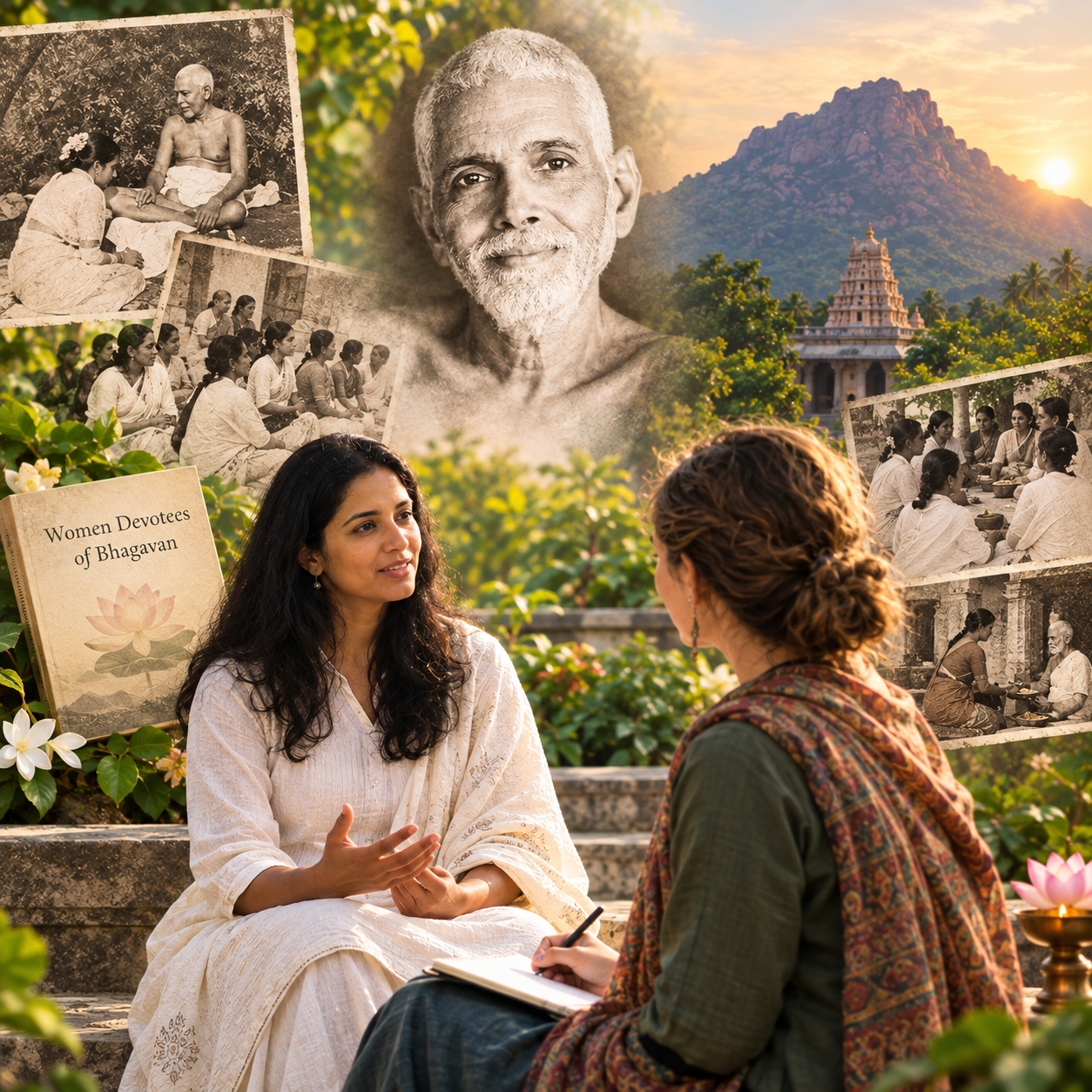
With Sneha Choudhury
By Erica Bassani
In the spring of 2025, i was in tiruvannamalai, india, to interview women teachers and leaders for the Women Awakening Project. There I spoke with Sneha Choudhury, a devoted follower of Bhagavan Ramana Maharshi and editor of Women Devotees of Bhagavan (photo right). In this conversation, we focused on Bhagavans interaction with women devotees and the feminine principle, offering a glimpse into the spiritual sensitivity of this master.
Sneha, can you tell us how this book came about?
The idea actually came from the President of Sri Ramanasramam, and we owe him deep gratitude. Although accounts of these women existed across various sources, he felt it was time to compile them in a single volume. He envisioned that the presence and voices of the women devotees should be honored. It was a collective effort to which the President himself contributed several articles. Honestly, I would have never imagined myself working on something like this. But when it came to me, I saw it as Bhagavans grace and did my best.
Who is Ramana for you?
Ramana is everything to me. When I was younger, I had many questions and doubts about prayer, rituals and their meaning. One day, I came across the book Be As You Are, and I felt that Bhagavan answered all my questions through it. What struck me was his logical and simple way of explaining things. I had no prior knowledge of meditation or Self-Realization at the time, but I felt drawn to him.
Later, in 1996, I found a Ramana center in Hyderabad. I was going through a personal crisis and needed support. What I found was a community that radiated Bhagavans teachings of love, compassion and care. It was like discovering a new world. Ultimately, all who are drawn to him come to Arunachala, because it is the heart—the grace, the light. Theres nothing in this world other than grace.
How did Ramana relate to women, especially considering the social norms of the early 20th century?
Let me start with his mother. She was devastated when Ramana left home and she searched everywhere for him. When she finally found him in a neglected state at Arunachala, she begged him to return, but he remained silent. When prompted, he wrote a note saying: What has to happen will happen; try as you may. The best course is to remain silent. She returned home but later came back to stay. Over time, he looked after her, prayed for her health and helped her transcend physical attachments. Eventually, she passed away in his presence. He guided her through the process, placing one hand on her chest and another on her head, silencing her thoughts so they wouldnt give rise to further births. He later declared that she had merged with the Self.
What about his interactions with women devotees?
Most of the women who came to him were widows, deeply rooted in traditional practices. For example, during their menstrual cycles, they were not allowed to enter the kitchen or be touched. One day, a woman had her period, and her relatives were away. She stood outside the ashram gate, and a kitchen worker cooked separately for her. When Bhagavan noticed, he asked why food was being taken outside. When he learned the reason, he insisted that she be brought inside and served the same food as everyone else. He said, You cannot hurt another devotee with such customs. This was revolutionary at the time. Many Brahmin families stopped coming to the ashram after that, but Ramana didnt care. He said, Let them not come. This ashram is for everyone.
Ramana truly made no distinction between men and women?
Never. When it came to Realization, he made no difference. Though women werent allowed to stay in the ashram at night due to lack of accommodations, he always treated them with the same compassion and dignity. He welcomed everyone equally. Many women came for solace, for spiritual guidance or were simply drawn to his silent presence. Some had nothing—no shelter, no support. They stayed in verandas, old temples or with generous devotees. This book is a tribute to those women, who overcame resistance from society and their own families to follow their hearts. Interestingly, I feel that the kitchen workers may have benefited the most. They couldnt attend satsangs, but Ramana would wake up at 2 or 3 am to help prepare vegetables. Later, he would visit them in the kitchen, tell stories, share teachings. His simplicity came out most with them.
That reminds me of a poem he wrote. Would you say both the Shiva and Shakti aspects were fully realized in him?
Absolutely. That poem, where he writes from the perspective of a woman yearning for union with Shiva, is filled with devotion and longing. It expresses the souls desire to merge with the Divine. When people asked him to explain it, he simply said it came spontaneously and couldnt be explained. In devotional traditions, it is said that God is the only true male, and all souls are the female aspect, yearning to unite with the Divine. There is a story about a female devotee who was denied an audience with a saint because she was a woman. She replied, Am I the only woman here? The saint understood immediately.
Ramana often spoke of Purna—completeness. We are already full. But we dont realize it because of our ego-consciousness. We think we are waves, separate and competing, not realizing we are the ocean.
About The Author
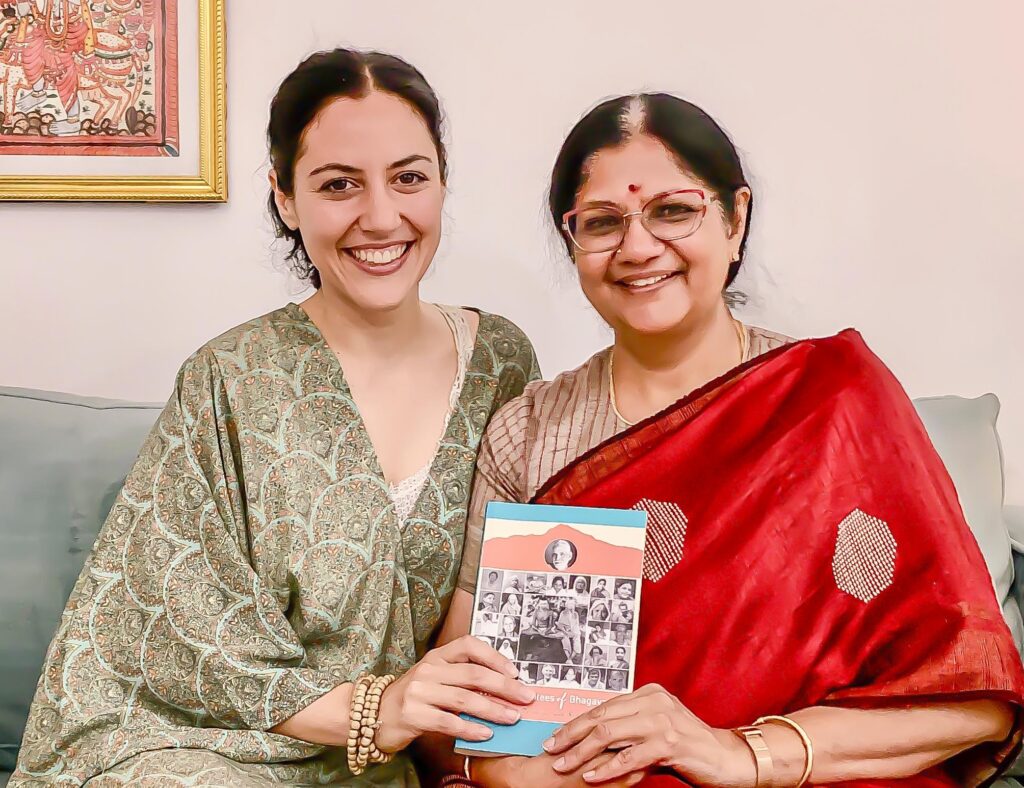
The Author: Erica Bassani has been a copywriter, author and spiritual seeker since her early twenties. She’s combined her highest passion with her deepest love by founding the Women Awakening Project (www.womenawakeningproject.com), a space to gather interviews with female masters of all spiritual traditions.
Leave a Comment