
India’s Imprint on Tanzanian Shores
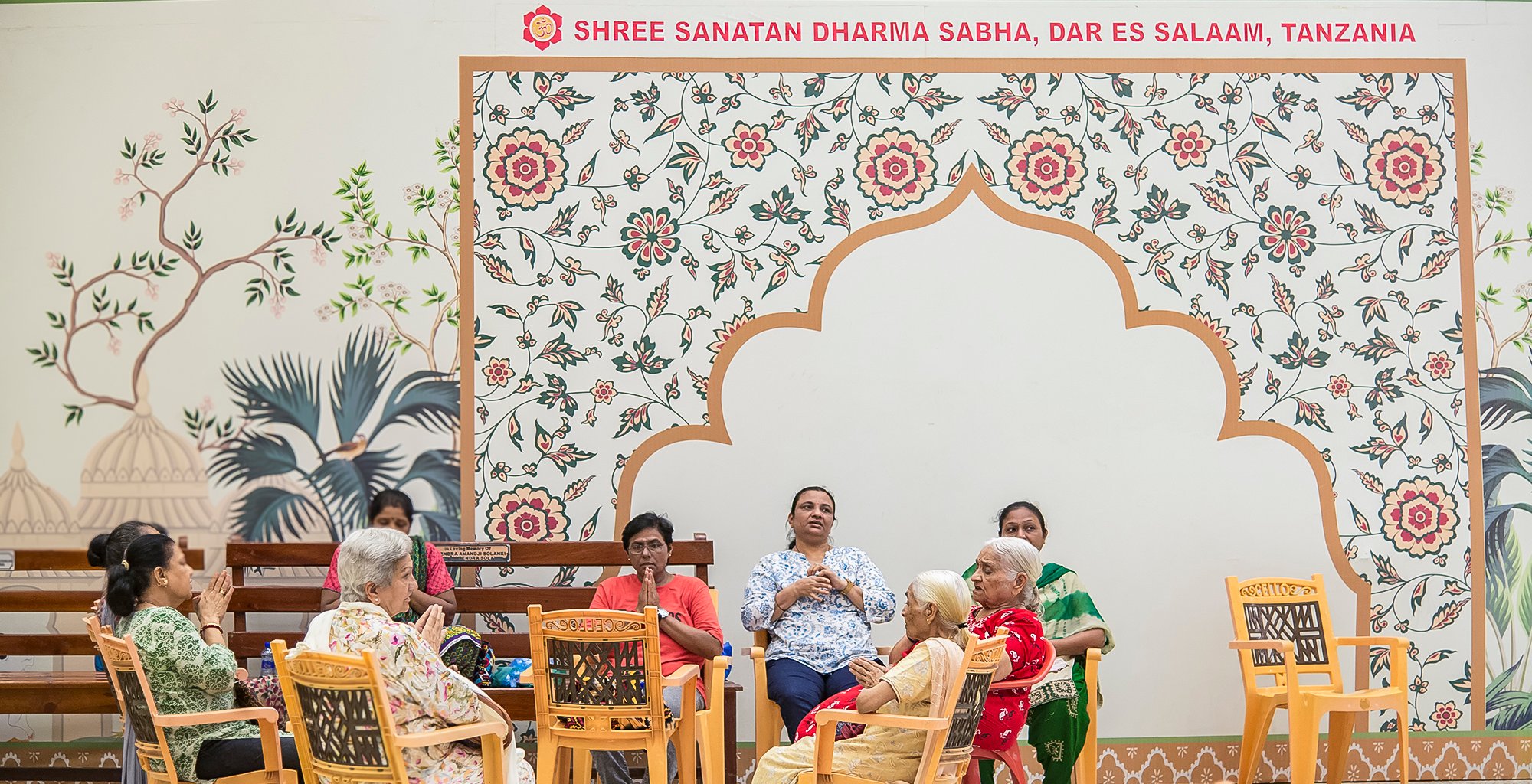
The small Hindu community harmoniously integrates with local Tanzanians while clinging tightly to their ancestral heritage and culture
For a long time, a trip to the african continent had been tickling me. One day, it was clear, and the decision was made: I am going to Africa! I chose to explore the great country of Tanzania, hoping to see wild animals, swim with whale sharks and blend in with the local population, including the famous Maasai tribe. While I was looking for a place to stay in the big city of Dar es Salaam, I came across an unexpected finding. The map showed an area with three Hindu temples, one next to the other. A closer look revealed an ashram and a few Indian restaurants. Indians in Africa? I wondered as my curiosity skyrocketed.
Weve all heard of the famous Silk Road—that ancient overland network of trade connecting China and Central Asia with the Middle East and the Mediterranean—but another significant path was the Spice Route, a network of sea and land trade routes linking Southeast Asia, India, the Middle East, Europe and Africa, where spices and other goods were transported for centuries. Historical evidence suggests that Indian sailors visited Africa almost 3,000 years ago. They used sailboats and hand-drawn maps, harnessing the monsoon winds to cross the Indian Ocean.
Trade between India and Tanzania presumably became more significant 1,500 years ago. The pioneers were merchants of the Malabar Coast (Kerala) and Gujarat (Kutch and Kathiawar regions), who were seafaring traders and shipbuilders.
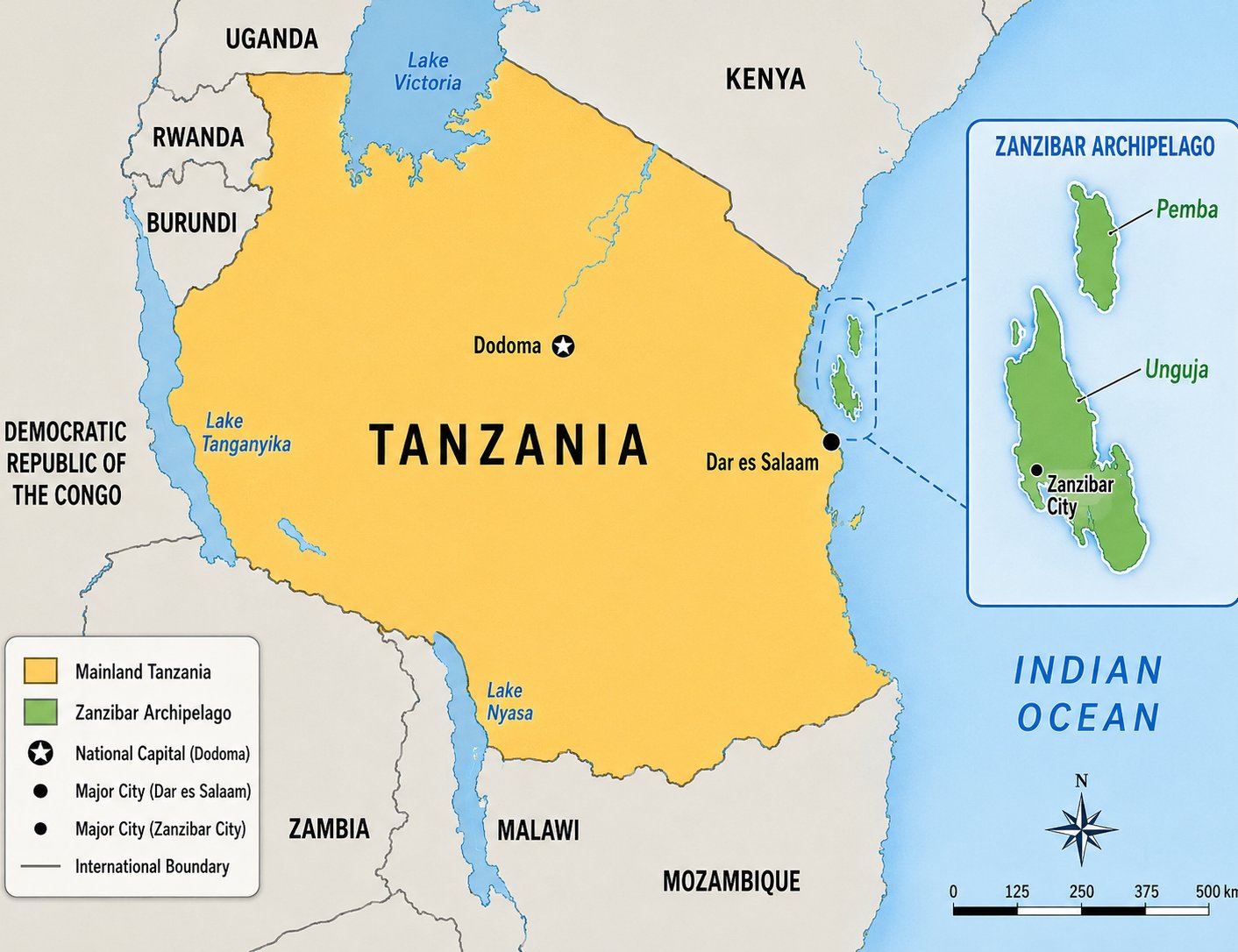
Zanzibar Island, today a part of Tanzania, is located close to the eastern coast of Africa, which explains why it was probably one of the first lands that sailors encountered. Indians have had a presence in Zanzibar for centuries. Merchants settled there as traders and financiers. They brought spices like pepper, cinnamon and cloves, textiles and beads, metals and minerals, horses and camels. In exchange, they returned with goods like gold, ivory, sugar, animal skins and timber.
Past patterns show that central trade hubs usually gave rise to small settlements of foreign traders, and this was also the case with Indians in Zanzibar. Their influence grew significantly in the 1840s, when the Omani Sultan moved his capital to Zanzibar and—due to longstanding relationships with Indian merchants and their expertise—encouraged them to settle. They brought capital, commercial knowledge and connections to broader Indian Ocean trade networks stretching from Mumbai to the Persian Gulf. Permanent Hindu communities in Zanzibar included Gujarati merchants, and their families established temples and institutions.
While walking through the narrow alleys of Stone Town in Zanzibar, I turned a corner, looked up and there it was—a sign reading Arya Samaj—Vedic Temple, in English and in Hindi. A playful feeling went through me: Here I am in Africa and Im standing in front of a Hindu temple. The temple was inaugurated in 1901 and is one of two active temples in Zanzibar, alongside the Shree Shiva Shakti Temple, established in 1958.
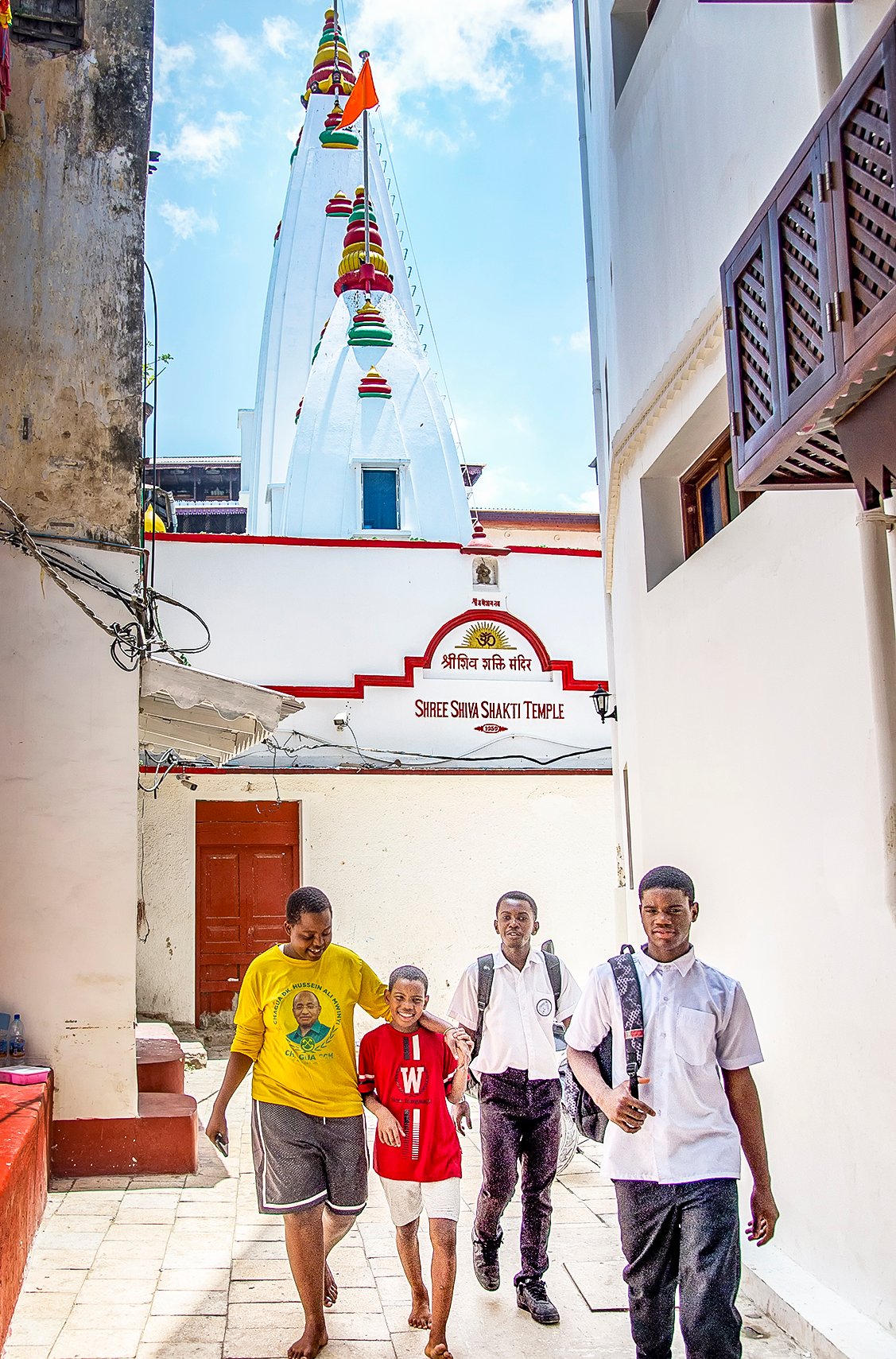
Photo: Anne Petry
Major growth of the Indian presence in East Africa is related to Britain, which colonized Kenya and Uganda in 1894 and brought around 30,000 Indian indentured laborers, mainly from Punjab and Gujarat, to build a railway network. After World War I, Britain took control of the territory of Tanganyika (today Tanzania) and the work continued there. At that time, many more Indians—educated, literate in English and already experienced in the British administrative systems—were brought to East Africa to work as clerks, accountants, postal workers, police officers and junior administrators.
As Tanganyika opened up, Indian merchants saw new business opportunities in trade and commerce. Akash Barmeda, a dive master I met on the beach, related: My great-grandfather arrived at Zanzibar Island on a sailboat more than 100 years ago. He manufactured wooden doors. At the beginning, he received orders from customers and sailed back to India to make them. Eventually, he began to produce doors in Zanzibar itself, and our family has been here in Tanzania ever since. Today, four generations later, the family is fully integrated in Tanzanian life: the children were born here, they hold Tanzanian passports and they speak Swahili (the local language).
But things werent all sunshine and roses. 60 years ago, a dramatic event shook the lives of Indians in Tanzania—a violent revolution broke out in Zanzibar, where Africans fought against the Arab sultan. Indians were not the primary target, but they were caught up in the violence due to their position in society. The Indian community, which had dominated trade for over a century, was largely destroyed within a decade, first by the 1964 revolution and then by socialist economic policies that stripped away their businesses and properties in the early 1970s. As a result, many migrated to the mainland, to the city of Dar es Salaam.
Tanzanias Indian-origin community, once numbering over 150,000 at its colonial-era peak, has since declined through emigration to roughly 60,000 today. Hindus number in the tens of thousands, most of Gujarati ancestry and speaking Gujarati, concentrated in Dar es Salaam. Our city of Dar es Salaam has at least seven active Hindu temples, explained Mrs. Janki Sinha, the president of the Hindu Council of Tanzania and the fourth generation of her family to be born here. For my conversation, it was only natural to meet in an Indian restaurant, located in the heart of the city, an area that had become something of a spiritual and cultural center for the Indian-Tanzanian community.
Photos: Anne Petry
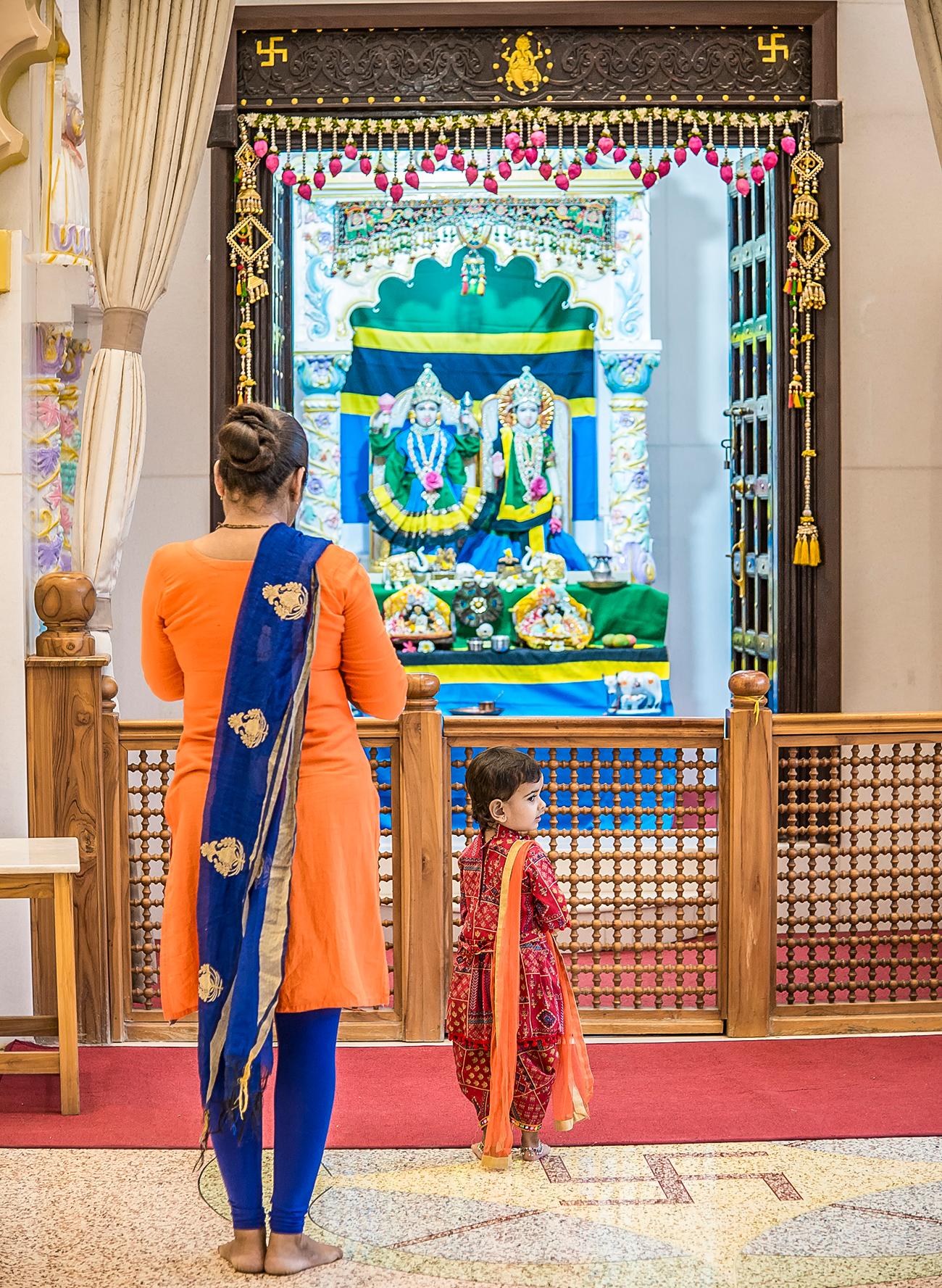
I asked Janki if the descendants of Hindu families who were born in Africa and speak fluent Swahili have kept the Hindu tradition, what their relationship to the religion is and if they practice it on a regular basis. Probably all people here have a small shrine at home, Janki stated. Though I was not born in India, I feel blessed to have this Hindu origin. The culture remains with me. Also, I cannot ask my children to perform rituals if I personally dont do them, so the way to teach children is by setting an example—they watch us and copy.
My in-laws used to sit every morning after bathing and read one or two pages from the Ramayana before breakfast. Nowadays parents are very busy in their daily lives, yet we try to make family time and use modern tools like Netflix to watch the series about the Mahabharata and Ramayana along with the children and explain when needed. One could carefully call these children hybrids—culturally and religiously Indians, yet practically and socially fully integrated Tanzanians.
Chowpatty Restaurant, where we met, is owned by a Hindu family. The father, Jayen Chandarana, was born in Tanzania, while his family is originally from Gujarat. Jayen shared, At home we perform morning and evening pujas while our children watch and take part. I know the Bhagavad Gita and Mahabharata and now Im more interested in the Puranas and the Vedas. His son, 29-year-old Raj Chandarana, was born in Tanzania and has been to India multiple times. My parents were able to transmit culture to me and I feel Hindu. My knowledge is not as wide as my dads but I do participate in all the rituals. When I carefully dared to ask if his parents would mind if he married a non-Hindu woman, Raj made things clear: It is my wish to marry a Hindu woman. The caste thing doesnt really matter; what does matter is that it would be easier, our culture and tradition are similar and theres going to be less confusion for our children. While on the topic of marriage, Raj added, We make use of birth charts (Vedic astrology). We follow it also when it comes to marriage and we ask the priest, in whom we trust, whether the potential partner is a good match or not.
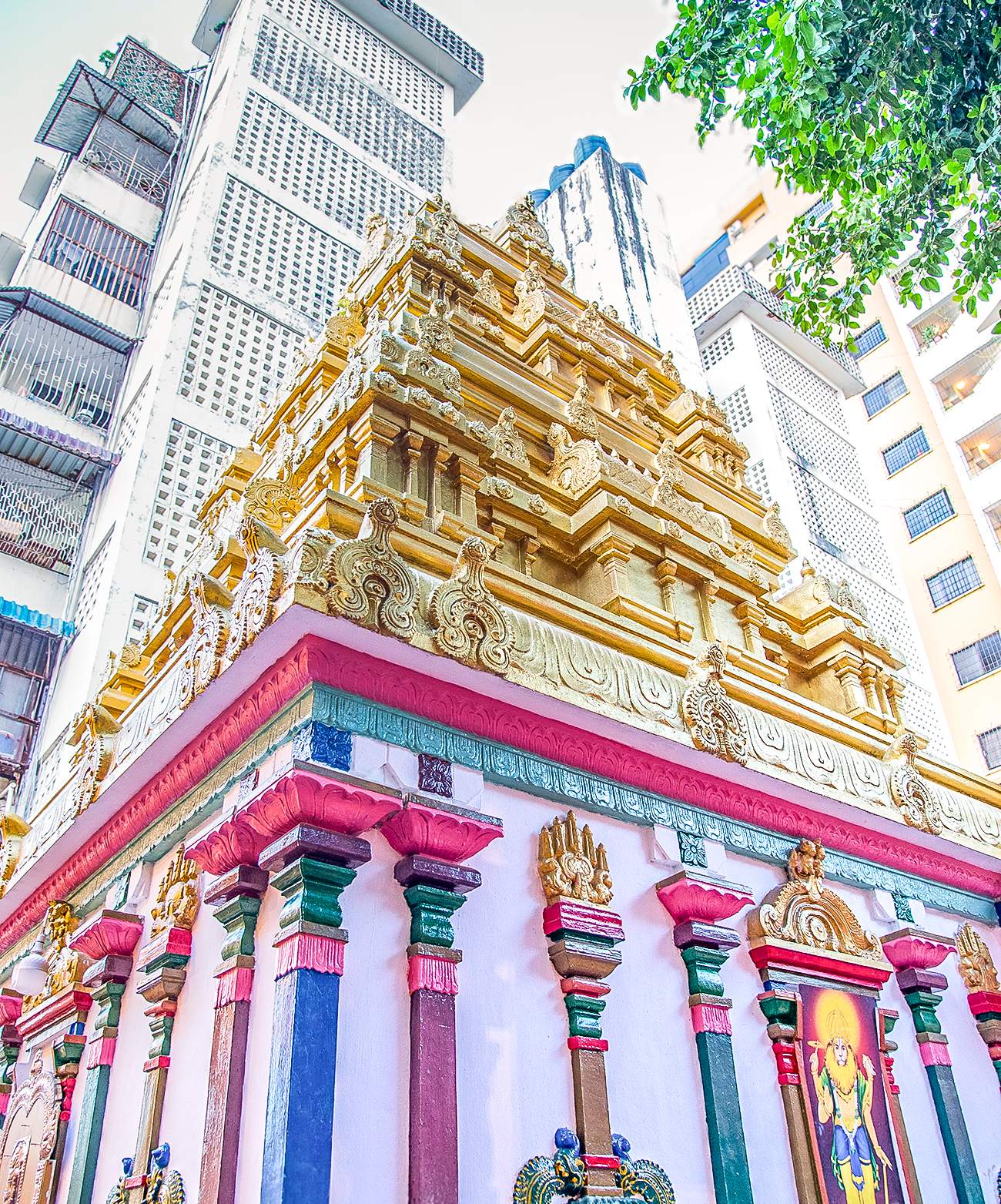
Photo: Anne Petry
It was fascinating to watch Hindus communicating with local Tanzanians in Swahili. It took my brain a few moments to grasp the phenomenon, but for many, it is actually their native tongue, since they were born here and went to school where they learned Swahili as well as English. Nevertheless, a lot of parents want their children to learn their ancestral language, and the task of teaching it is left to the family and the community. Gujaratis form the largest component of the Indian-origin community, and many still speak Gujarati. Janki Sinha emphasized: At home, I converse with my children in Hindi and Gujarati.
After those few encounters, it seemed like everyone I talked to had a strong sense of their Hindu identity and a deep connection to Hinduism and to India in general.
In matters of language and in many other areas concerning religion, tradition and community life, special institutions play a role and were established in part for this very purpose. The Hindu Councils job is to serve as a bridge between the community and the government. We have several congregations and various institutions, pointed out Sinha. Shree Hindu Mandal is one institution that has a school, a hospital and welfare services that benefit the Hindu community and others, since most services offered are for all people regardless of caste, race or religion and thereby keep Hindu values such as fairness, honesty, truthfulness and service to others.
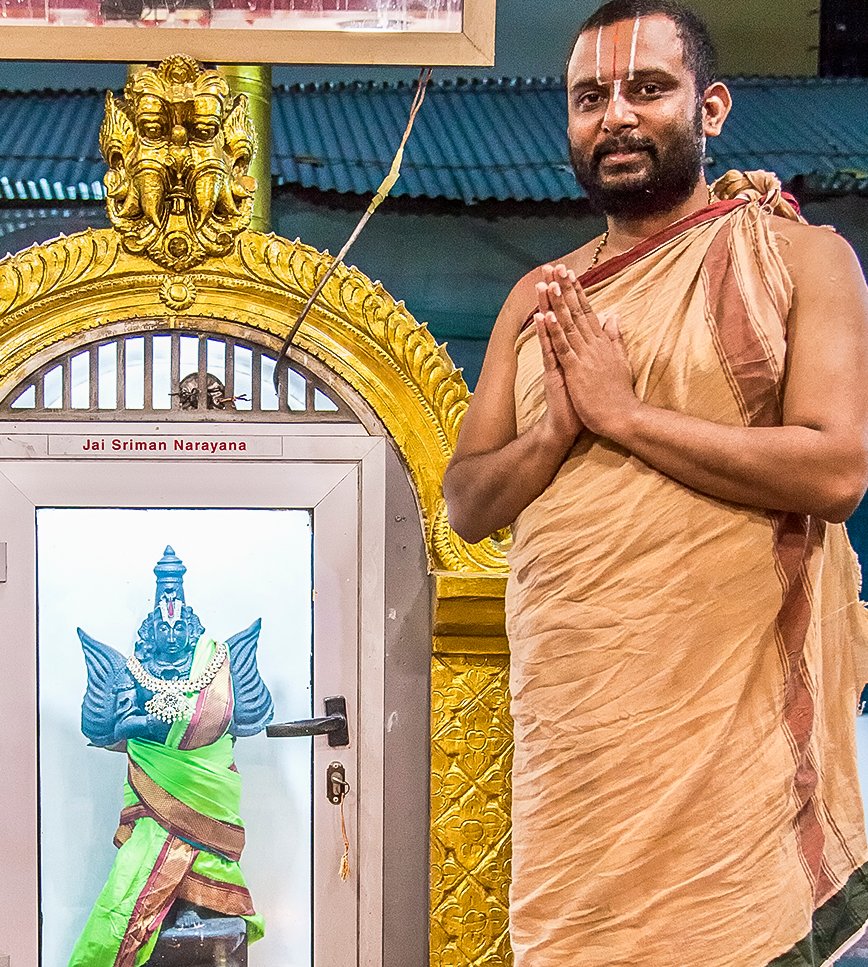
Photo: Anne Petry
Similarly, for cultural activities we have the SSDS—Shree Sanatan Dharma Sabha. The Apex Body also supports religion, culture and sports and additionally provides business and employment support. As security is a serious need, theres a team of volunteers who come together to provide security assistance during the time of holy festivals.
Visiting the SSDS complex was a lot of fun. Every early evening, you find many members of the Hindu community gathering around. A lot of them join the religious rituals. Women sit together and chant the holy scriptures; outside, old men gather in a parliament and discuss the days events. Under the same roof you get a chance to see various well-equipped Hindu shrines run by Hindu priests. One such priest is Lakshmi Narasimha Rajagopal Iragavarapu. I was sent here from India by my guru. When this Balaji Temple was built, the swamis, priests and Deities were all brought from Tirupati, India. When I asked whether worship here differs from practice in India, he replied, We are the ones performing the pujas and therefore there is no difference between the way the rituals are performed in Tanzania and in India. We also have shrines for Lakshminarayana, Shiva, Jalaram, Sai Baba and Krishna. We all come under Sanatan Dharma.
Rajagopal, who arrived in Tanzania in 2017, offered a fresher outsiders perspective on the life of the community. The Hindu Tanzanians who have been here for three or four generations are still very much connected to our Sanatan Dharma and follow all the traditions: Ganapati puja, Dandiya, Garba Navaratri and more. Rajagopal said he felt at home in Tanzania and observed that the smaller community size seemed to work in its favor: I sense they receive the transmission in a very good way.
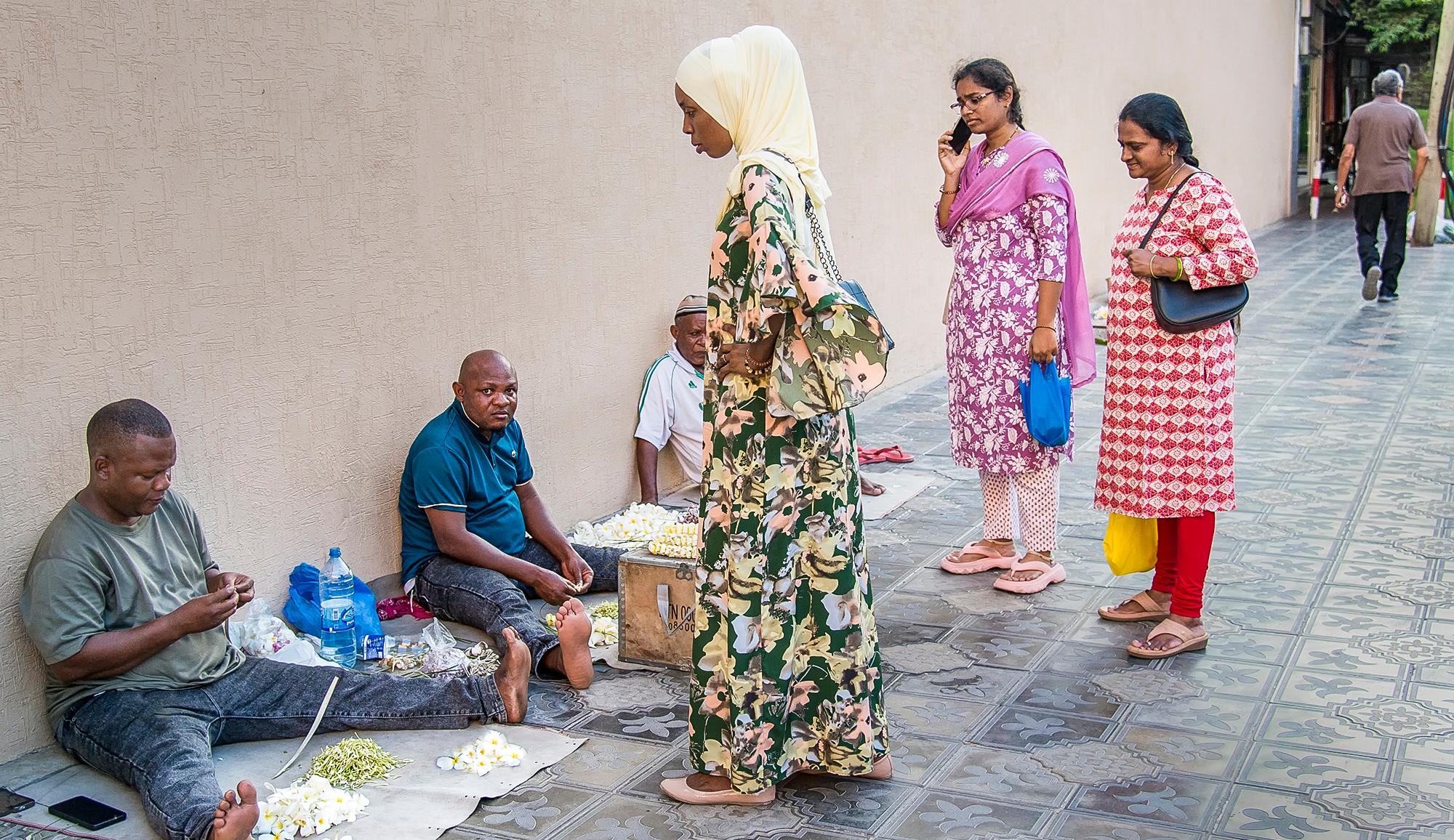
Photo: Anne Petry
When I asked about the countrys religious tolerance and his personal integration, he replied: The locals are very polite and soft people. There is acceptance and tolerance toward other religions. Some are curious about our temples and holy figures and ask me questions. We also respect others. Our Christian and Muslim workers are free to do their own prayers undisturbed, and sometimes they even come and receive prasad. Our guru says: The goal of reaching God is always the same, while the ways to get there may differ. Yet one God is there, and getting the blessings is the same.
Are you also teaching Hinduism to the children? I asked. Yes. We have classes here—Saraswati Pathshala—where we teach basic shlokas (sacred verses) in the Sanskrit language. As Janki Sinha confirmed: We bring the children to the temple to listen to readings of the Bhagavad Gita and other Hindu content. In the past, it was even compulsory to memorize and learn shlokas by heart.
Indian traditions are also maintained in family structure. Many Hindus follow the cultural practice in which elderly parents live in the same home as their children and grandchildren, provided the house is large enough.
Death, too, reveals the depth of this connection to religion. Once a person dies, some rituals are carried out in Tanzania. People may first take the body home, perform the customary rituals, and later bring it for cremation on a wooden pyre or in a gas crematorium. Some may then have the ashes transported back to India for the final rites. The Shree Hindu Mandal supports and subsidizes this process, requiring people to pay only minimal fees.

Photo: Anne Petry
A clear picture emerged from different sources: Hindus in Tanzania are strongly connected to their roots. Those who were born here see themselves as Tanzanian, but more specifically as Indo-Tanzanians. It is not a personal effort by individuals alone, but a joint effort by a well-united community that preserves their culture and traditions. The willingness of parents to send their children beyond official school time to study the holy texts and scriptures is unmistakable—this is their dharma.
Walking through the Indian quarter of Dar es Salaam felt surreal. I had arrived in Tanzania directly from India and suddenly I felt as though I was back in the Indian subcontinent! Besides Indian restaurants serving amazingly tasty food, there were shops for Indian snacks and treats, men sitting on the ground outside a temple selling flowers for offerings and women in kurtas browsing fruits and vegetables at a street stall. Not far away stands the T.B. Sheth Public Library, a prime expression of Indian culture and history. Founded in 1938, it houses 7,000 books in Gujarati. In this small Indian neighborhood, the only thing that brought me back to reality was an occasional local Tanzanian passing through the street.
People meet in restaurants to dine on their favorite traditional foods made by chefs from India. Anyone unfamiliar with Indian food traveling through Tanzania could easily conclude that samosa, chapati, biryani and chai are African dishes, since they appear on almost every menu, not only in Indian restaurants. I heard that the early Indian settlers taught African ladies the intricacies of Indian cuisine, and that some learned to cook almost as well as Gujarati women. Food is a central part of culture, a living expression of tradition, and the Hindu diaspora offers a powerful example of how a community can maintain its heritage while living far from its homeland. In fact, when traditional cuisine is preserved abroad, it is almost always a sign that religion and other customs are being kept alive as well.
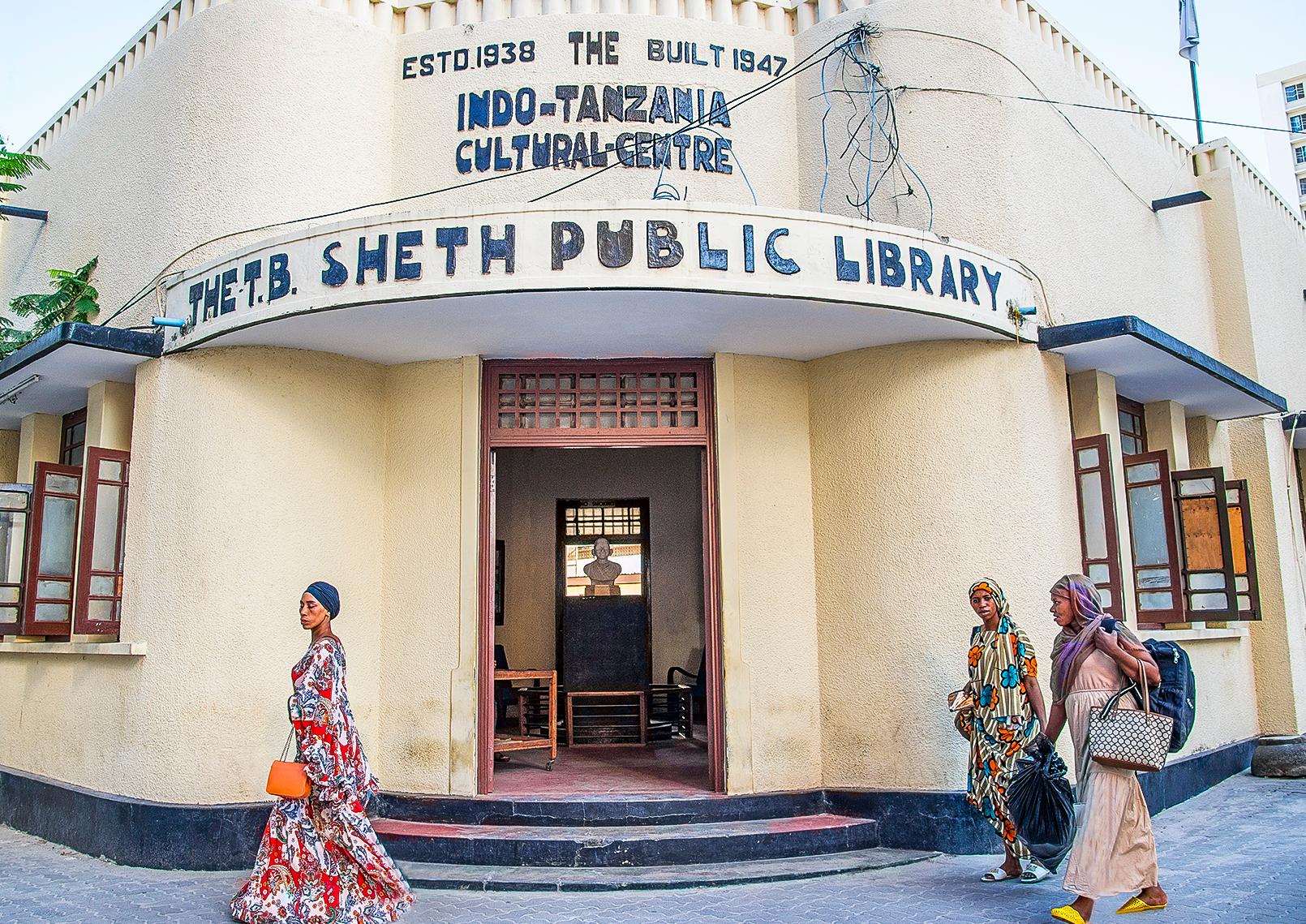
Photo: Anne Petry
During my trip through Tanzania, I hoped to meet Hindus descended from people who settled in East Africa before British rule began in 1920, to explore whether their perception of and relationship with religion differed from that of Hindus whose families arrived during the colonial period. Unfortunately, I was unable to do so, since it appears that the early settlers from India were mostly Muslims. But I did observe how living far from ones homeland strengthens collective, national and religious identity. The heightened sense of belonging draws people of shared backgrounds closer together, making such communities remarkably unified, marked by fewer internal disputes and a strong spirit of solidarity.
In most interviews, one theme kept recurring whenever I asked whether there was any desire to move to India. People said they enjoy their peaceful life in Tanzania and feared that India might be more crowded, noisy and hectic. They do love India and visit their family there often, yet Tanzania is home. It is a peaceful country; we do not feel discrimination or racism, and we contribute greatly to the local economy, said Bharat Gopal, an expatriate originally from Bengaluru. I feel that Indians here preserve their culture and religion even more strongly because life in Tanzania is less intense and gives us more time. We also do it to show our families back home that our traditions are kept alive rather than neglected.
Its safe to say that some degree of generational erosion of religious practice is seen everywhere, and Hinduism in Tanzania is likely no exception. Nevertheless, the overall situation appears stable, and Hinduism is here to stay. It was beautiful to witness how the people I met throughout my research were flourishing. They did not seem torn between two cultures or caught between two worlds. Quite the contrary, there was a profound sense of harmony and peace in being Hindu in Tanzania.

Leave a Comment