Trincomalee’s ancient clifftop shrine has outlasted empires, survived colonial destruction, and continues to draw pilgrims today

By Thulasi Muttulingam, Sri Lanka
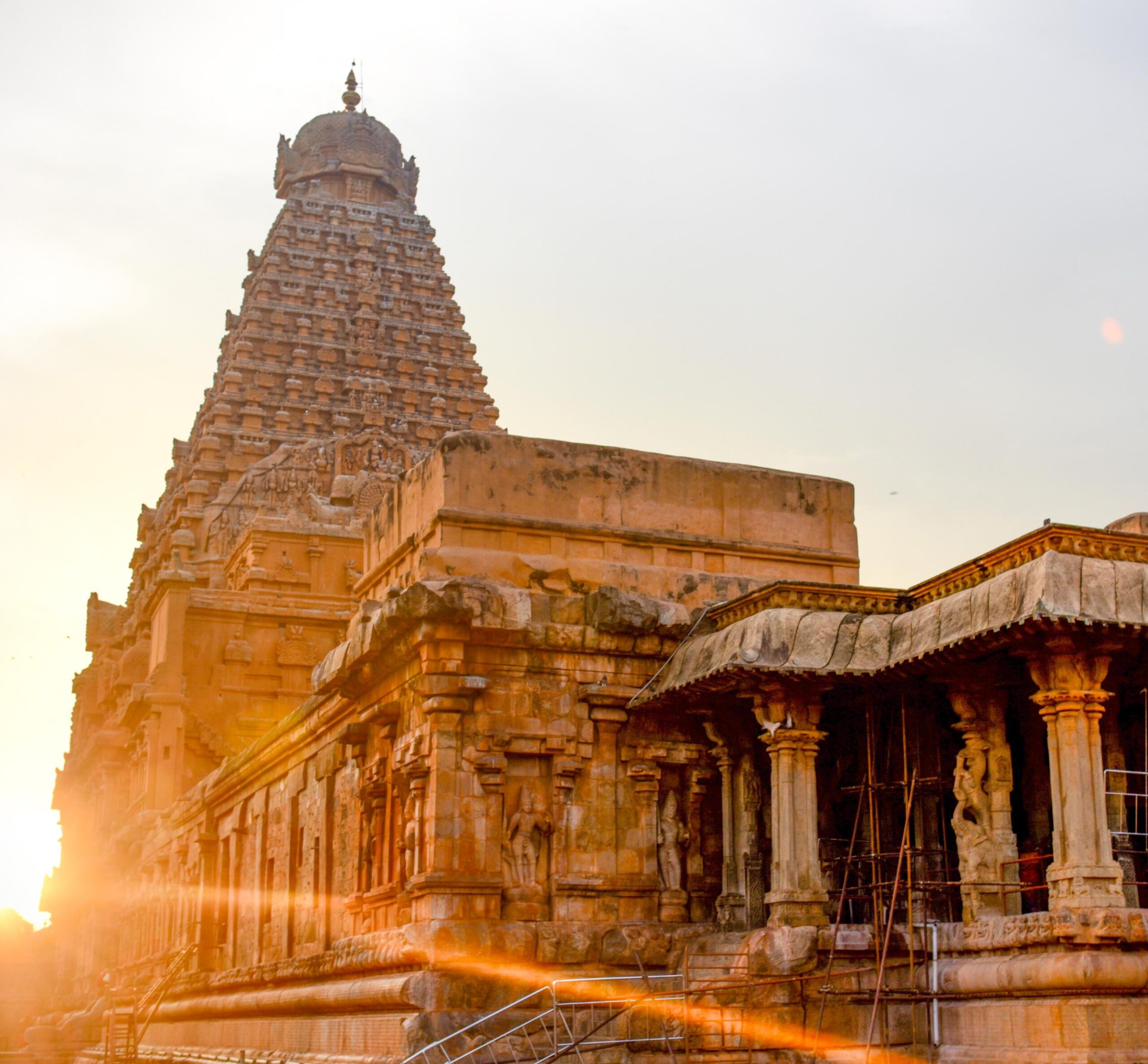
Perched above one of the worlds great natural harbors, Tirukoneswaram Temple is a civilizational landmark. Here, history, politics, commerce, military ambition and spirituality converge. Tirukoneswaram combines tiru, meaning sacred; kona, meaning peak or apex; and Iswaram, Lord, a name of Siva. Together: Sacred Peak of the Lord. Emperors, conquerors, merchants, seafarers, pilgrims and poets—all have left their mark.
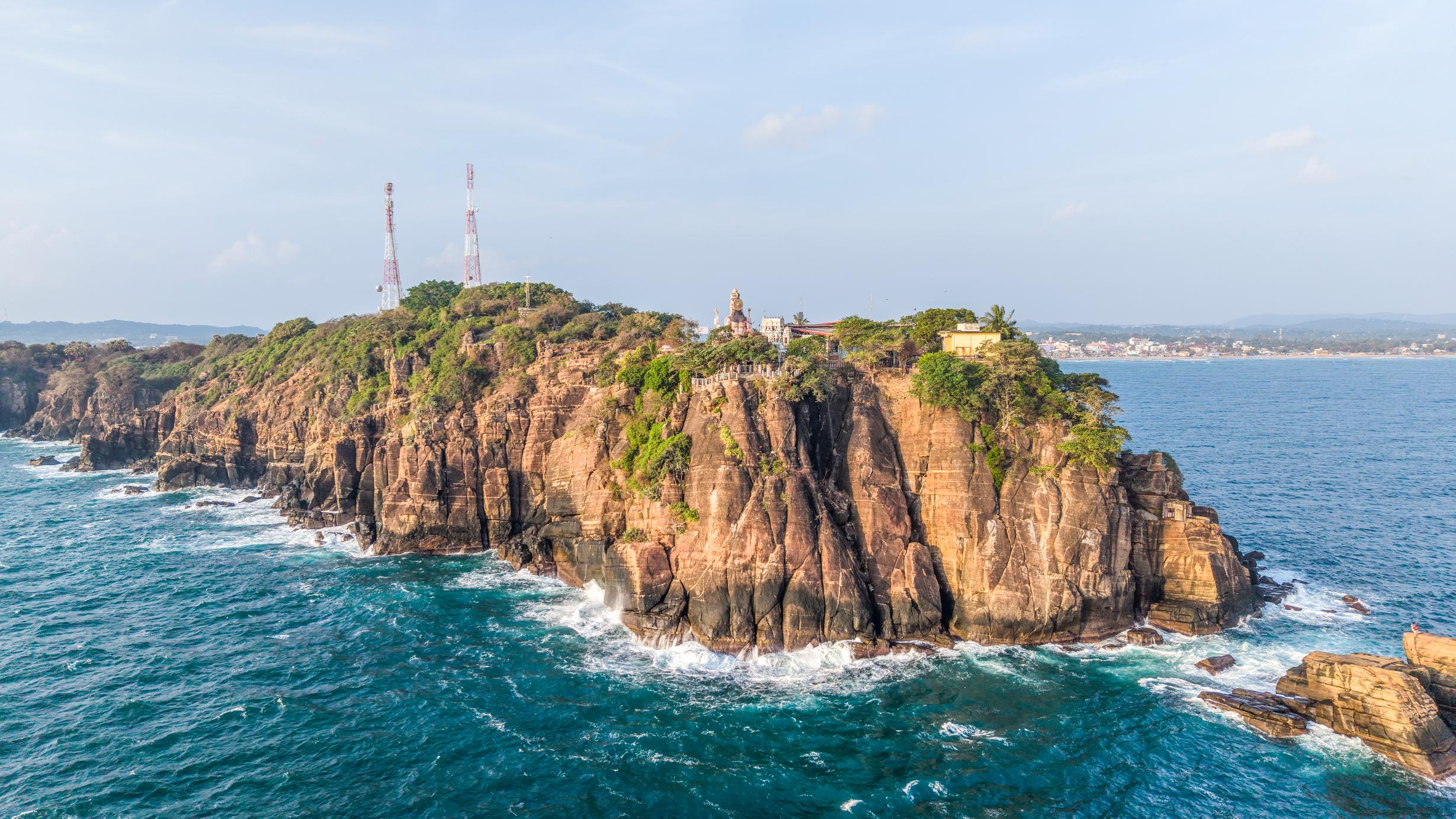
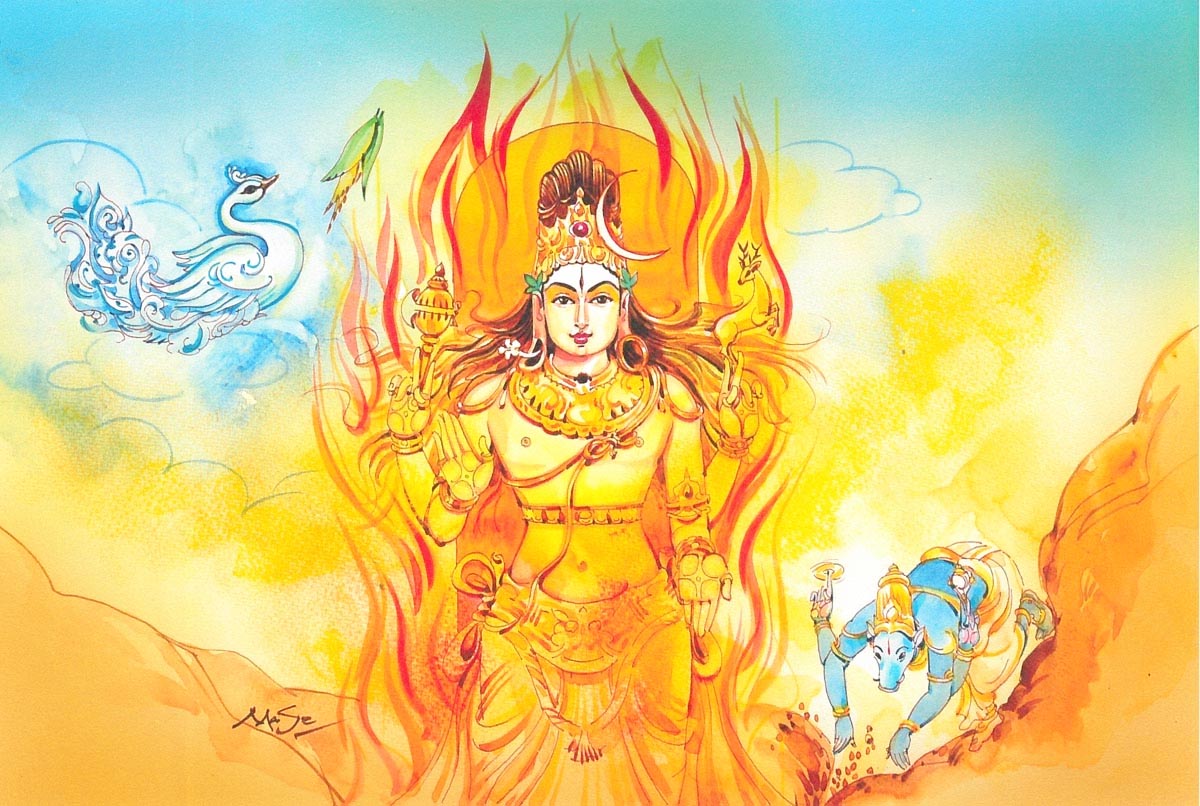
Lord Siva, it is said, is the God of liminal spaces. He prefers to abide in thresholds that segue from one form to another—hence why He frequents cremation grounds, cliffs, mountain peaks and river mouths. No wonder, then, that He chose Swami Rock at Trincomalee: an ancient headland of submerged mountains, rising abruptly from an otherwise gentle coastal plain in sharp relief. He sits here atop a 167-foot-tall promontory, an elongated cliff jutting into the sea.
The visuals are striking. Even in a country known for scenic beauty from coast to coast, the clifftop shrine stands out in majestic splendor. Not because the current temple edifice is grand in scale—it is not, though it once was in medieval times—but because the landmark itself is arresting. Siva has chosen His vantage spot well.

Over the millennia, every power of consequence has sought to claim this strategic hinge in the Global South linking East and West. Even today, this geographical nexus in the Indian Ocean off Sri Lankas eastern coast remains coveted and contested.
A 36-foot statue of Lord Siva greets you as you summit the cliff, His serene expression unbothered by all that has come before and might yet come again. He has presided over cosmic clashes between devas and asuras, primordial tumults between good and evil, colonial conquest, native resistances, and the battles between the Allied and Axis powers in the Second World War. Today the conflicts continue more sedately, yet no less fiercely, with native Tamil and Sinhala claims over the locality, and the quiet strategic rivalry between China and India over control of the harbor. Conflicts are nothing new to Siva. Like His presence on the cliff, He rises above it all. Behind Siva rises His temple, being constructed anew. The Lord of Trincomalee has been through it all.

Tirukoneswaram is one of five famed Saiva shrines known as the Pancha Ishwarams, which fortify the Sri Lankan coastline on all sides: Naguleswaram in Jaffna on the northern coast; Thiruketheeswaram in Mannar on the northwestern coast; Tirukoneswaram itself in Trincomalee on the eastern coast; Munneswaram in Puttalam on the western coast; and Thiruttondeeshwaram in Dondra on the southern coast.
Their origins are mostly lost to mythology and vague historical records. There is evidence for their being at the very least a thousand years old. Mythology associated with them traces back three thousand years or more. All five were sacked by Portuguese colonists in the sixteenth and seventeenth centuries, with historical records vanishing in the process. All five are now revived and functioning, albeit what was Thiruttondeeshwaram at the southernmost coast is now the Dondra Head temple, a Vishnu–Buddhist shrine maintained by the Sinhala community. The other four continue as Hindu temples maintained by the Tamil community. Folklore traces the origins of these temples to King Ravanas time and beyond, drawing mainly from the Ramayana and Mahabharata. King Ravana, villain of the Ramayana, was known as a great Siva devotee, and each of these shrines contains some legend associated with him.
The person most widely credited with transforming the Tirukoneswaram temple into a magnificent edifice renowned far and wide was a king remembered as Kulokotta Mannan, famed for his irrigation works. While there are no historical records of his life, he continues to fire imagination and veneration in the minds of devotees. Professor S. Pathmanathan, an eminent historian in Sri Lanka, surmises that Kulokottan was possibly a son of Rajendra I, the Chola king who campaigned across much of South and Southeast Asia in the eleventh century. There are temple inscriptions dating back to Rajendra I, who patronized this temple, and many of the retrieved statues from the area associated with the temple date to this period or later.

According to local tradition, Kulokottan was a prince of South India who, after his fathers death, heard of the temples greatness and sailed across to see it for himself. He became a devoted devotee and patron, going on to build it on an epic scale to mirror Indias Kailasanathar Temple at Kanchipuram. Tirukoneswaram temple was already known as Dakshina Kailasa, the abode of Siva in the South. Kulokottan is credited with establishing a network of satellite shrines along the promontory and into surrounding villages, some of which survive to this day. He also laid the socio-economic foundations of the temple complex, creating artisanal settlements, agrarian villages and irrigation systems that ensured both ritual continuity and material stability.
That pattern remains visible to this day. Rippling green paddy fields stretch across the plains, fed by an intricate system of tanks and waterways winding through them, glinting silvery blue under the tropical sunlight. Nearby, the great Kantale Reservoir spreads like an inland sea, its vast surface and radiating canals standing as enduring testimony to the scale of hydraulic planning that sustained the temple economy. A tenth of the peoples revenue went toward temple maintenance. Current villagers—hereditary servicemen of the temple he established—still tithe and continue in the same temple duties their forefathers undertook. Though many are contemporary professionals today, they return to perform their hereditary roles during temple festivals and functions, ranging from priests and administrators to ritual-specific workers such as garland makers and interior decorators. The temple, already renowned by Kulokottans time, was patronized by Sri Lankan and Indian kings in the centuries that followed.

The Pancha Ishwarams did not function as Saivite shrines alone. They also served as the maritime and political infrastructure of their age. All these coastal temples were embedded within maritime circuits linking South India, Southeast Asia, Arabia and the wider Mediterranean world. They functioned as port cities, administrative centers and spiritual hubs, intertwined with the kings and dynasties ruling the land in ways that extended beyond worship alone. The Tamil word for temple—kovil—encodes this meaning etymologically: ko means king or Deity, and il translates to house or residence. The v is a euphonic connector between them—giving kovil, simultaneously the abode of the Divine and the kings house. The ruler was traditionally viewed as a representative of God on Earth.
The temples were likewise administrative and fiscal centers—archive, court, treasury and registry, the bureaucracy of their day. Tamil merchants, Arab traders, Southeast Asian sailors, and occasionally Mediterranean intermediaries converged on Sri Lankas ports. Major temples also functioned as economic hubs sustaining hereditary occupations—priests, musicians, artisans, scribes, cultivators and maritime workers, whose obligations and privileges were tied to temple endowments.
Like sacred signposts, the Pancha Ishwarams dotting the coastline acted as a maritime markers. Temple towers did what flags do today—they announced presence. At Swami Rock specifically, the old temples peak towered high above sea level, overlooking a deep natural harbor, performing the function of a lighthouse before the era of modern lighthouses. Temple flags revealed wind direction. Gold-plated gopurams reflected sunlight as well as moonlight, by which ships could find their way. Sound traveled efficiently across the water; conch blasts, bells and drums created acoustic markers detectable offshore. These elements formed a sophisticated navigational system.

Festivals, too, carried navigational significance. They frequently aligned with monsoon shifts and sailing seasons. In the Indian Ocean, timing was survival. A festival could signal safe departure windows, expected return periods and seasonal trade cycles. Oral memory encoded meteorological knowledge in sacred narrative: After the Lords festival, the winds turn. In an age before printed charts and standardized maps, temple stories held the landscape in memory, translating cliff, tide, hazard and harvest into accessible knowledge by which sailors steered.
The Indian Oceans predictable monsoon cycle made long-distance maritime trade reliable, long before European oceanic navigation was mastered. Trincomalee sat precisely where several trade arteries converged. On the east-west axis, ships carrying silk, porcelain, camphor, cloves and spices passed Sri Lankas eastern coast before turning west, linking China and Southeast Asia through the Bay of Bengal to the Arabian Sea and onward to the Red Sea, the Persian Gulf and the Mediterranean. On the north-south axis, Tamil merchant guilds used Trincomalee as a staging port before crossing the Bay of Bengal toward Southeast Asia. Trincomalee offered the nearest deep, safe harbor to that crossing. It was an ideal monsoon waiting point where ships could arrive early and rest in calm waters, reprovisioning, undertaking repairs and offering prayers, before making dangerous crossings. Ancient navigators did not merely dock here—they planned their journeys around it.

For ancient mariners seeking divine blessings for their voyages, Tirukoneswaram functioned as a protective haven, a place of stillness before crossings and a thanksgiving site after survival. This mirrors other maritime Saiva sites across the Indian Ocean.
In 1505, new ships—from Portugal—appeared on this ancient trade route, ostensibly for trade. Just seven years earlier, in 1498, Vasco da Gama had discovered the direct sea route from Europe to India by sailing around the southern tip of Africa, setting in motion a ripple effect that would tip the balance of power across the Indian Ocean. For years, Arab and Venetian intermediaries had controlled the spice trade from the Indian subcontinent, and by the time the spices reached Europe, many were worth more than their weight in gold. The Portuguese now sought not merely access but monopoly—especially over Sri Lankas coveted cinnamon and strategic harbors.
Over the sixteenth century, they established fortified coastal strongholds, beginning around Colombo, and progressively tightened control over maritime trade routes. They operated under a system known as padroado, which fused empire-building with evangelization, through the use of force and violence. They aggressively proselytized, and converted many of the coastal communities, leading to conflicts with kings inland. The king of Jaffna, facing the loss of territory and the destabilization of his kingdom through mass conversions, sent an army to Mannar which killed six hundred Catholic converts. The Portuguese attacked the kingdom, won, and annexed it. With Jaffna conquered, Portuguese authority extended more firmly across the north and east.

In 1622, their forces moved decisively against Trincomalee, and by 1624 had demolished the Tirukoneswaram temple, using many of its stones to construct a fort on the promontory—Fort Frederick, which still stands there today. Other temple architecture and murtis were cast off the cliff.
There is no official account of loss of life during this event, either from local sources or from contemporary Portuguese records. Evidence suggests collaboration with a Vanniar chieftain from the Kottiyar district who may have converted to Catholicism. The Portuguese missionary Francis Xavier had apparently sent missives to the king of Portugal claiming the conversion of three royal personages in the subcontinent, among them a prince of Trincomalee. Since Trincomalee was not an independent kingdom but came under the purview of the Jaffna kingdom at the time, scholars estimate this was likely a local chieftain. As Xavier visited Sri Lanka in the 1540s, some eighty years prior to the temples demolition, it is possible there was by then an extensive network of local collaborators. Historical details of these conversions and missionary missives are documented in Fernão de Queyrozs 17th-century chronicle, The Spiritual and Temporal Conquest of Ceylon.
As per local Hindu lore, the temple was demolished on the Tamil Hindu New Years Day of April 14, 1624. Worshipers had been celebrating the New Year with great pomp and festivity all day at the summit of Swami Rock. The Portuguese—some dressed as Hindu priests and pilgrims—infiltrated the festivities. Once the revelers had gone on the procession away from the main temple, the few brahmin priests remaining at the shrine were easily overpowered by a company of soldiers who sacked the holy site over the next few days. There are records of devout worshipers and temple service workers secreting away statues to Tampalakamam village fifteen miles away, where they established another temple. Those statues and that temple—Ati Koneswaram—still exist.

While archaeological excavations have never been undertaken—indeed, they are forbidden—various construction works from the 1950s onward have yielded ancient and medieval statues dating back one to two millennia. The most recent find was a statue of Nandi, Lord Sivas faithful mount and sentinel, dating to the third century ce, unearthed in 2012 during construction work at the current Tirukoneswaram temple. Following the discovery, government injunctions were issued prohibiting the use of digging implements of any kind in the area. There is clearly a treasure trove of archaeological evidence both inland and in the surrounding sea; but due to ongoing land disputes and complex administrative hurdles, the sites full historical narrative remains waiting to be uncovered.
Local villagers surmise that their ancestors—likely forced to demolish their own shrines—hid some artifacts away while burying those not feasible to carry off. Several more were sent plunging into the sea, where they remain today, resting beneath the waters off Swami Rock and forming a magnet for divers drawn to the otherworldly sight of submerged temple ruins. Still to this day, fishermen will stop their boats above the submerged ruins, where they will pour water over their bow as a sunrise blessing before heading out to sea.

The temples structural stones, columns and plinths were used in the Portuguese fort. Among those stones is an inscription, believed to date back to the temple, describing how the parangis—the local term for Europeans—would demolish the shrine and that no king would arise again to rebuild it. Framed as a prophecy, this has given rise to awed conjecture that the temple bore an inscription foretelling its own destruction. Scholars such as Professor Pathmanathan, however, regard it more cautiously, suggesting it may have been composed retrospectively after the events it purports to predict.
Portuguese chroniclers, and even the commander who oversaw the raid documented the temples destruction both before and after the event, though they do not go into detail. They do record that there were considerable temple riches to strip away, and that the masonry was either toppled into the sea or repurposed in the construction of their fort.
The destruction had profound psychological consequences for the indigenous maritime communities who depended on the shrine. After the temples fall, several shifts became visible in the records. Sailors could no longer perform traditional departure or return rites at Trincomalee. The sea, once framed as dangerous but meaningful, became arbitrary and hostile. Authority shifted from divine sanction to colonial permission, and local merchants increasingly withdrew from long-distance trade or became subordinate intermediaries.

In the centuries that followed, Sri Lankan kings repeatedly sought alliances with other European powers in the hope of dislodging the colonizers. Each new power, supplanting the old with native strategic support, then refused to relinquish the strategic control thus gained—becoming new colonizers in turn. In 1639, the Dutch displaced the Portuguese from Trincomalee, only to be displaced by the British in 1795. Sri Lankans regained their country, their native religions and their places of worship only after 1948, when the nation gained independence following nearly five centuries of colonial rule.
While the coastal shrine was lost, its economic and spiritual lifeblood survived not far away. Tampalakamam village, fifteen miles inland from Tirukoneswaram, is linked to the Mahaweli River basin. This is Sri Lankas longest river and the backbone of its largest irrigation network, feeding Trincomalee through canals, reservoirs and seasonal streams. The lands around Tampalakamam were devadana holdings, villages whose agricultural surplus sustained temple priests, festivals, musicians and daily worship with rice, milk, ghee, flowers and cloth flowing from Tampalakamam to Swami Rock.

When the Portuguese destroyed the temple, they shattered the crown but left intact the heart that sustained it. This inland territory fell under the purview of the king of Kandy rather than the vanquished kingdom of Jaffna. The Kandyan king stepped in as patron of the re-established Ati Koneswaram temple in the region. The name translates as the original Koneswaram, reflecting the transfer of sanctity to this site, where devotees had fled with the artifacts and images they managed to save. The paddy and other tithes thereafter flowed to this temple, which still stands today, retaining the original statues installed there and continuing to be funded by the tithes from the region.
The lands around Ati Koneswaram temple, once held in trust for Tirukoneswaram and now for this shrine, ripple golden-green with waving sheaves of paddy in the bright sunlight to this day. This land cannot be repurposed for any other use, and according to the temples manager, the revenue still brings in far more than is required for the shrines maintenance, including elaborate annual festivals. The ancient royal revenue model continues to sustain and replenish the shrine and settlements established a millennium ago.
At the time of the Portuguese invasion, three temples stood upon the promontory, with satellite shrines extending into the surrounding regions. Along the upward path to the clifftop rose a sacred sequence: near the base stood a Shakti temple, revered as one of the original eighteen Shakti Pithams, drawing devotees of the Goddess from medieval times to the present day. Higher up was a temple to Vishnu and His consort, a shrine whose bronze icons have since been recovered and reinstalled. At the very apex of the cliff, fronting the shimmering blue of the Indian Ocean, stood the majestic Siva shrine, extolled in the Tamil Tevarams and devotional literature. All of these were demolished by the Portuguese. As of today, only the Siva shrine has been fully rebuilt.

Modern Reconstruction
Hindu worship was expressly forbidden by the Portuguese (1622–1639) and discouraged by the Dutch (1639–1795), but restrictions eased under the British (1795–1948). During British rule, the only part of the medieval temple left standing on the crest was a solitary rock pillar—a surviving remnant of the original Temple of a Thousand Pillars. Ceremoniously safeguarded to this day, this pillar became a poignant focus of devotion which the British allowed to become the center of worship once again. A formal temple structure, however, would not be constructed for as long as colonial authority remained on the island.
In the late nineteenth century, currents of Hindu revivalism spread through the subcontinent, sweeping along Trincomalee in their wake. Local Hindu leaders began pressing for the restoration of Tirukoneswaram at or near its original location. The site, however, became a major strategic nexus in the Second World War, and temple reconstruction was hardly a priority for the British Imperial mind.

On April 9, 1942, Japanese carrier-based aircraft bombed Trincomalee harbor and its surrounding installations, sinking several vessels and compelling the British Eastern Fleet to withdraw temporarily. Although the attack inflicted significant damage—including the loss of HMS Hermes off the eastern coast—British and Allied forces ultimately retained control of the harbor. As K. Saravanapavan, a Trincomalee researcher and writer, notes in his book The Most Dangerous Moment in Ceylon, the raid exposed the vulnerability of the island at a time when Singapore had already fallen and Japanese naval power seemed ascendant across the region. In his wartime memoirs, Winston Churchill later described this phase of the conflict as one of the gravest and most perilous moments of the war, stating that had Ceylon been lost, the future would have been black. With Singapore gone, the loss of Trincomalee would have dealt a catastrophic blow to Allied control of the Indian Ocean.
Just as Lord Sivas Tandava dance reminds us, periods of destruction are followed by pause, rebalancing and eventual renewal. Soon after the Second World War ended, so did British imperialism. By 1948, Sri Lanka had gained independence, and by the 1950s, a modest but functioning temple structure once again stood on Swami Rock. It continues to evolve even today, though it remains restrained in scale compared to its medieval form.

At the base of Swami Rock stands Fort Frederick, the colonial stronghold built by the Portuguese which continues to assert an imposing presence. Now maintained by the Sri Lankan army and navy, the site is still regarded as a strategic defense location. Devotion and defense dovetail on the same ground, as they had since before Colonial times.
To reach the shrine today, pilgrims must first pass through the stone gateway of the fort. Then begins the climb upward through an archaeological treasure trove, marked by the traces of empires come and gone, their imprint visible both above and below ground. Medieval Tamil Saiva saints such as Sambandar once sang of the wooded beauty of this ascent, of groves thick with verdant greenery along the cliff path. While the ancient forests are long gone, clusters of trees still shade the way. Moving through them, remarkably at ease among visitors, are flamboyantly iridescent peacocks and docile spotted deer. They roam with quiet entitlement, as if aware that the land was once theirs and they hold unique status as Sivas beloved spirits. They appear to expect the attention of human pilgrims; if you are unsure how to approach them, the deer with their expressive eyes will indicate the treats at the army-run snack shop nearby. Many a pilgrim stops to pay a cute tax to these bandits before moving on. The peacocks strutting about as though they own the place may or may not pause for your treats, but the stray dogs meekly coexisting with the deer are grateful for any attention.
The inhabitants of this sacred domain are not limited to the feathered and the fleet-footed. Others swing above, while others slither below. A grey serpent—reminiscent of the naga adorning Sivas neck—might glide across the path upward, moving with a calm entitlement that suggests it is entirely at home. As the chosen ornament of the Lord, its presence is accepted as a natural extension of the shrines sanctity; notably, the seasoned pilgrims hardly turn a head at its passing.

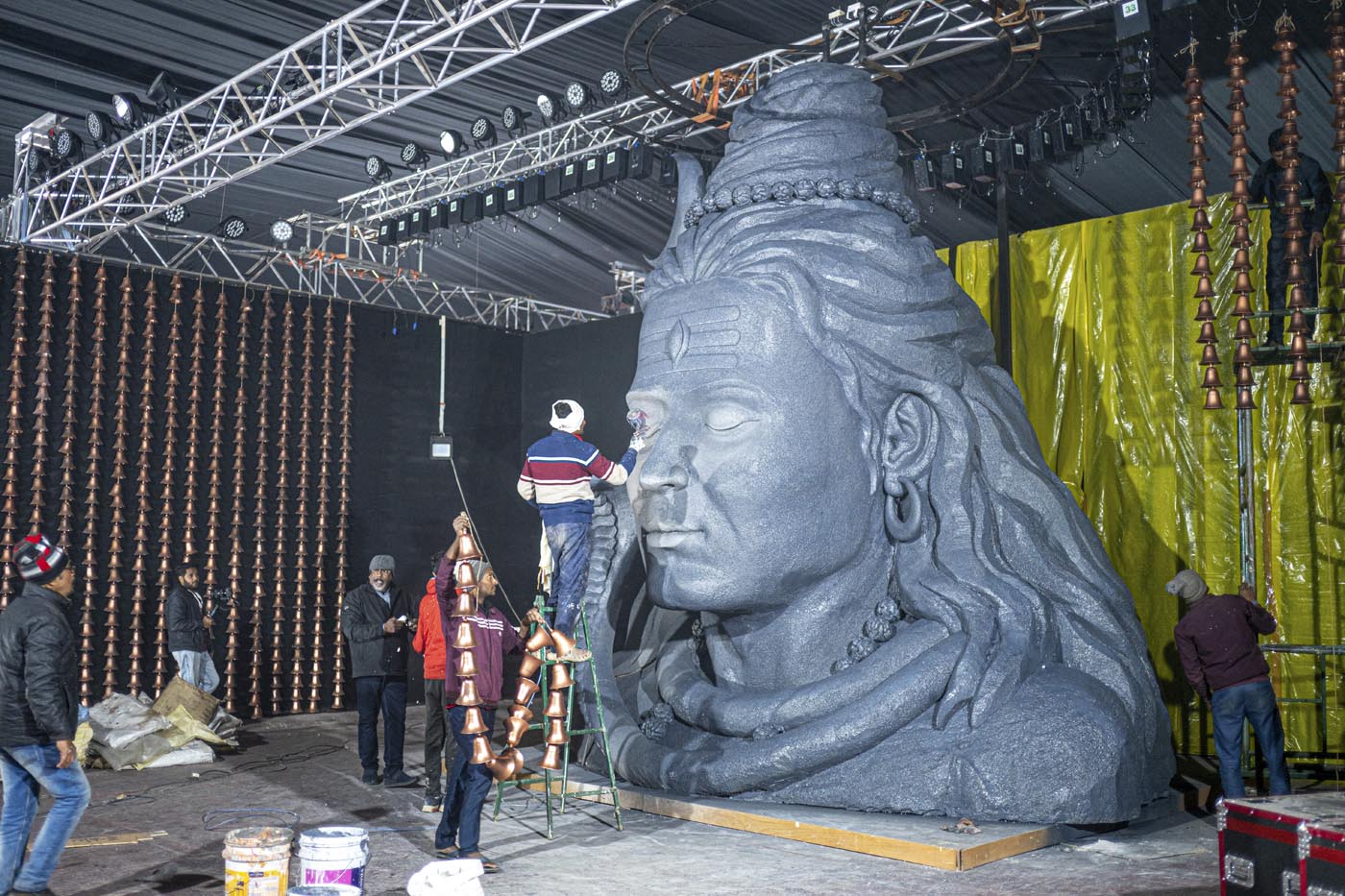
Lord Sivas imposing presence looms as one approaches the summit. This is His third iteration of His likeness in modern construction. Temple authorities have repeatedly reimagined His likeness, each iteration an attempt to capture something of the luminous divinity that devotees expect, yet arriving at a representation that satisfies both pilgrims and regulators has proven elusive. Questions of proportion, posture, expression and symbolism continue to spark debate and, at times, discord. The Lords grace has proved difficult to capture, even for master sculptors commissioned from India. Behind the colossal seated Lord—His front hands extended in blessing, His rear hands lifting a deer and an axe—the modern temple is modest in scale, its pastel tower and bright panels standing quietly at His back.
Inside, the temple feels distinctly modern, bright and airy, in contrast to the shadowed depths of older shrines in the region. Skylights and tall windows draw in generous shafts of sunlight, which scatter across white marble floors gleaming throughout the sanctum. The main shrine is dedicated, of course, to Siva in the form of the Sivalingam, with Nandi, His bull, seated in attentive gaze before Him. Along the circumambulatory passage around this sanctum, Deities and saints carved in black granite stand adorned in richly colored silk saris, pleated and draped with careful precision. Their jewel-toned folds cascade over the dark stone in riots of color: fuchsia pink, emerald green, turquoise blue, vermilion red and saffron gold, the borders shot through with glittering gold thread. Fresh garlands of marigold and jasmine rest against the fabric, their brightness set vividly against the black granite.

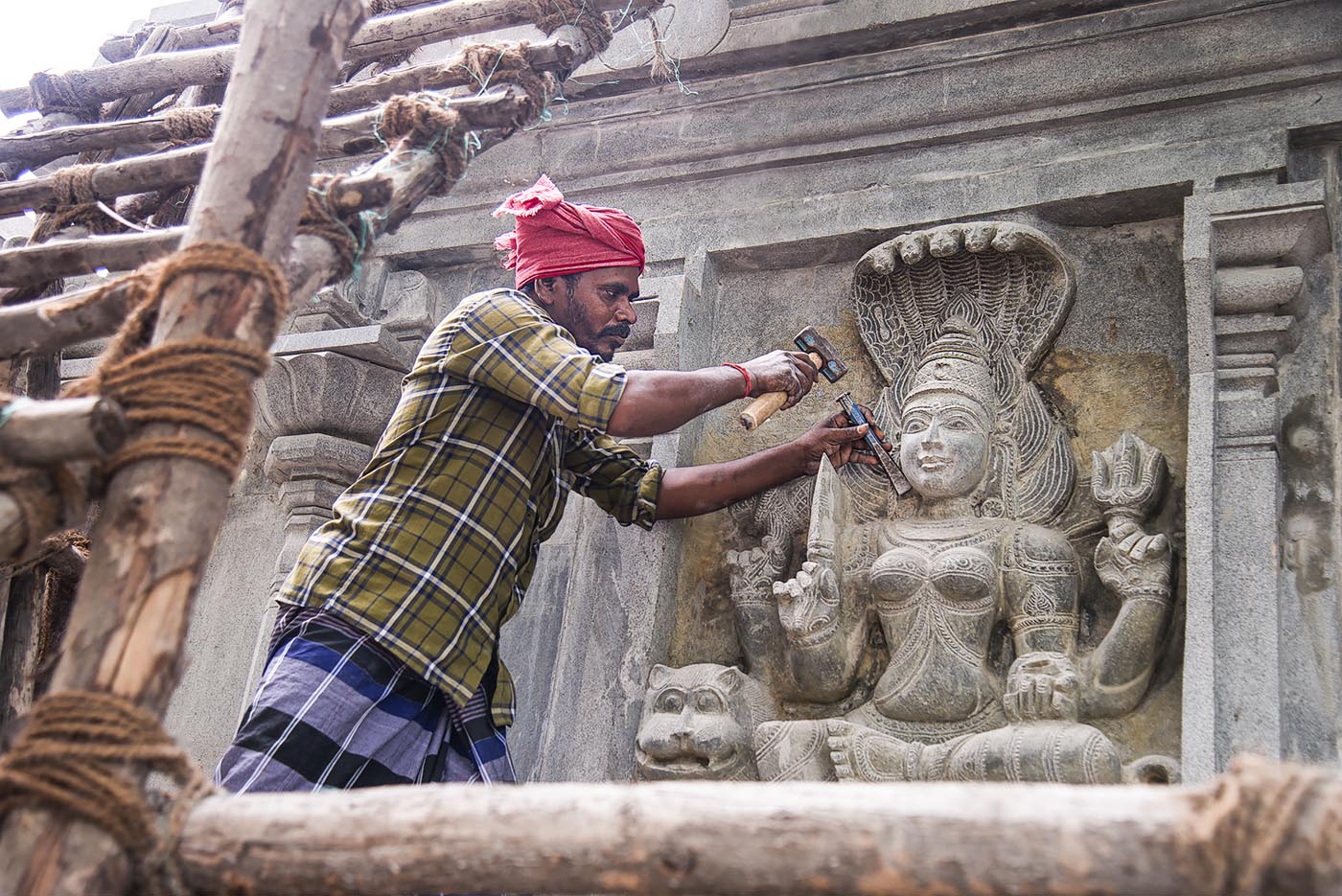
Higher up on the walls, rendered in fresco and bas-relief, are the legends associated with the temple, drawn from both recorded history and sacred mythology. Portuguese soldiers in Western attire are shown destroying the ancient shrine. Nearby, King Ravana appears in devotion to Lord Siva, offering one of his ten heads he has plucked to serve as a musical instrument. Also depicted is King Kulakottan, directing villagers in the construction of the irrigation tanks associated with his name, which have ensured both the temples prosperity and the long-term economic sustenance of the surrounding villages.
Just outside the temple, in grottos and groves overlooking the spectacular Indian Ocean, stand yet other shrines to Deities and saints. To one side of the majestic Siva towering above the complex sits the Nandi statue unearthed in 2012 during construction work at the site. Since then, even the use of simple digging implements such as pickaxes has been embargoed by the state, much to the distress of devotees who wonder what else their ancestors may have left buried from the old temple. The Nandi has been dated to the 3rd century ce and there is speculation that the earliest shrine at the site may have been established much earlier. The site was certainly known in South India by the early medieval period: standing nearby is a portly representation of the Saiva saint Sambandar, who, despite passing away at sixteen in the 7th century, had already extolled the shrine in his Tevaram hymns.
The priests conduct their first puja of the day at 6:30 in the morning, waving oil lamps amid Sanskrit chants and the ringing of bells. Once the aratis are completed within the inner sanctum, they continue to the shrines along the cliff face. The panoramic vista is breathtaking as one steps outside. Swami Rock falls away in sheer, striated faces of weathered Cambrian stone into the ocean on three sides. On the day of our visit, the sea was a serenely luminous blue. White surf lapped gently at the base of the cliff. Wind blew in refreshing gusts across the promontory, tempering the tropical heat with salty spray. The priests managed to keep their flames alight as they performed their pujas while the breeze swept through our hair, stirred the silk garments of the Deities in their rocky alcoves, and carried the scent of camphor out over the water.

In one of these rocky recesses stand the rediscovered Vishnu and His consort, sheltered beneath a cobra hood—Chola-era statuettes retrieved and restored to their rightful place of worship. Our local guide carefully lifts the cloth adorning Vishnu to reverentially reveal the fine workmanship of His torso, sculpted by the hands of a master craftsman a millennium earlier. A little further out, poised on a lower ledge of the precipice, stands the guardian figure of King Ravana, palms pressed in devotion. At his feet rests the ancient stringed instrument he is said to have fashioned in praise of Siva, the Ravanahatha. Beside him gapes the cleaved cliff known locally as Ravanan Vettu, Ravanas Cut, believed to have been split by him in a paroxysm of rage and grief upon hearing of his mothers death. The legend extends inland to the seven springs of Kinniya, some 15.5 miles away, where he is said to have struck water from the earth for her final rites. The famed seven wells of varying temperature at that site remain an important pilgrimage destination to this day.
Swaying gently in the wind, straddling the shrines, are hardy canopies of trees. Tiny wooden cradles swing in their branches—tied by devotees in prayer for having children. As Sri Lanka navigates shifts in demographic trends, Sivas grace is petitioned to rock the cradle.
For some—particularly the government of Sri Lanka—the political, military and economic importance of Trincomalee Harbor commands the greatest attention. But for local Hindus, the spiritual and historical significance of the shrine takes precedence. The shrine continues to draw pilgrims from far and near. Hindus and Buddhists from across the country visit daily, as do devotees from abroad, especially India. The temple forms part of the Ramayana Trail, a series of sites in Sri Lanka associated with the epic; pilgrims believe that Lord Rama worshiped here to seek Sivas grace after killing King Ravana. Shakti devotees who believe that one of the ancient shrines on this promontory was among the original Shakti Pithams also journey here from India.
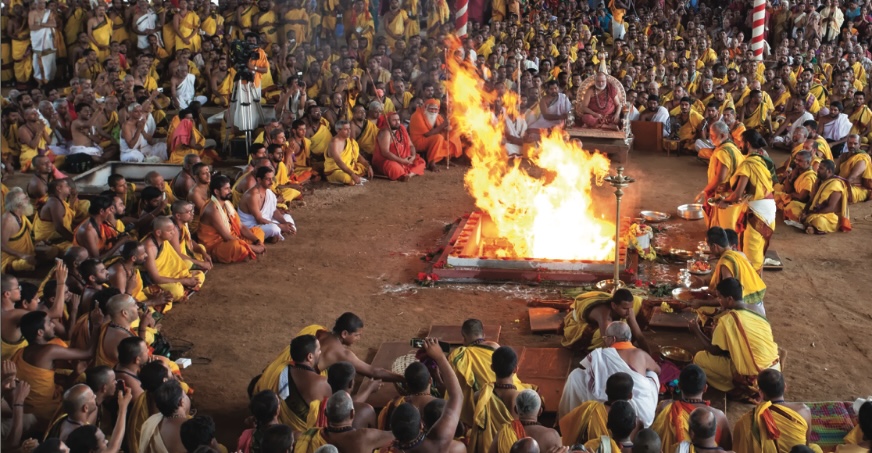
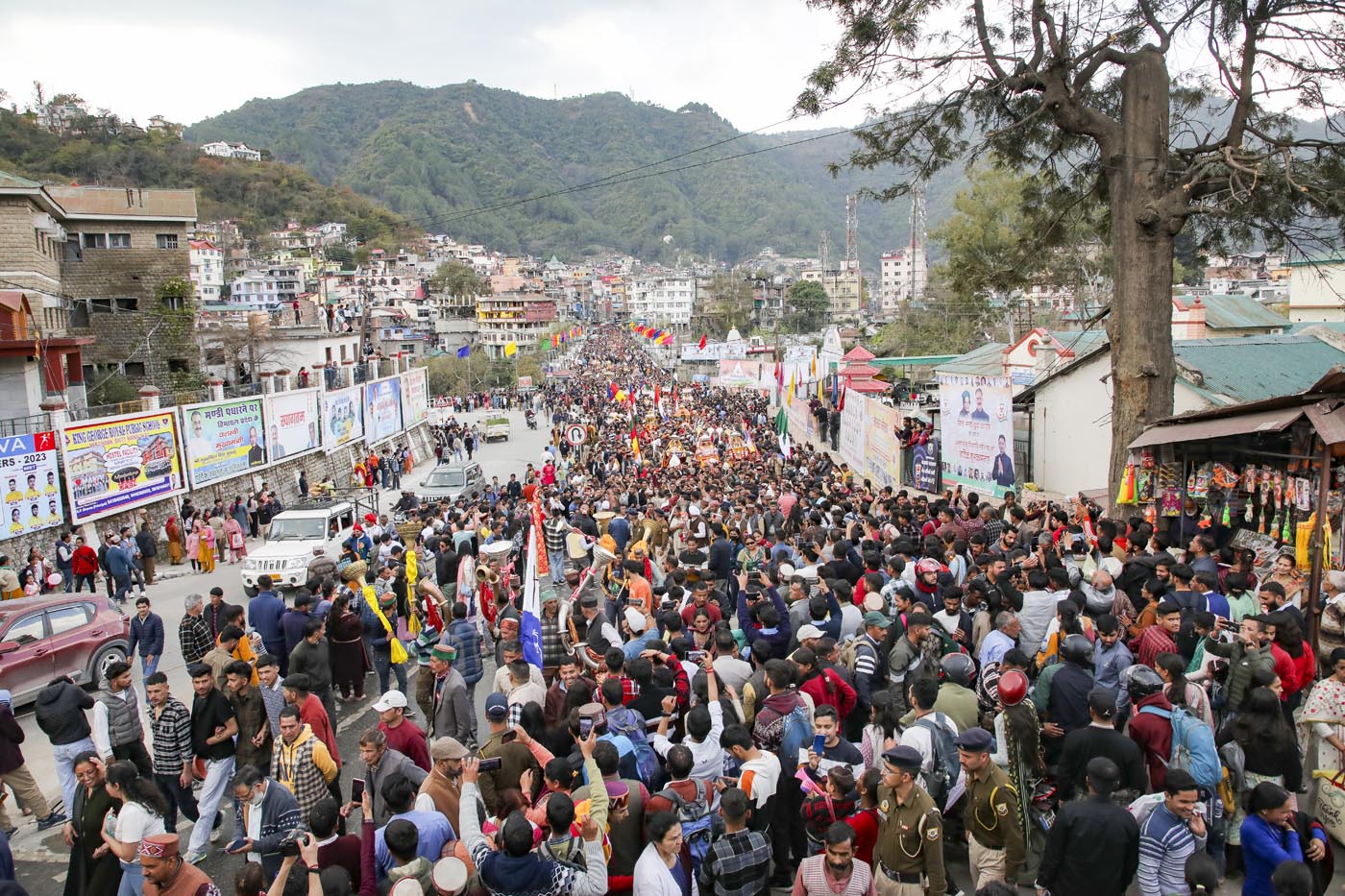
Annual festivals such as Sivaratri, Navaratri and Tamil New Year are celebrated with great devotion and festivity. The most significant of these is the temples chariot festival. Each April, Tirukoneswaram marks its great Ther Thiruvizha—a celebration that unfolds over several weeks and transforms the town into an extension of the shrine. The presiding Deities, Konesar and Mathumai Ambal, are ceremonially brought out from the sanctum and installed upon towering, flower-decked wooden chariots, which are pulled through the streets by throngs of devotees grasping thick ropes in collective prayer. Drums resound, nagaswaram pipes pierce the air, coconuts are broken, camphor flames rise, and balconies spill petals onto the passing procession. The festival culminates in sacred water rites that echo the temples intimate relationship with the surrounding sea. During this festival, the Deity does not remain on the cliff summit. He descends into the town to meet His devotees where they are.
For centuries, they carried Him in their hearts. Now He resides once more upon His cliff, restored to His people. After dissolution, He reminds us, there is renewal.
About The Author

Thulasi Muttulingam is a Sri Lankan journalist with nearly two decades of experience in investigative writing on social issues in her country’s post-war North. Being a Tamil Hindu, an ethnic minority in Sri Lanka, her work explores the intersection of religion, ethnicity, history and the socio-political landscape, with a focus on lived realities and rebuilding communities.